


Native Plant Garden Inspiration: North Carolina Style
A native woodland garden in our same ecoregions!
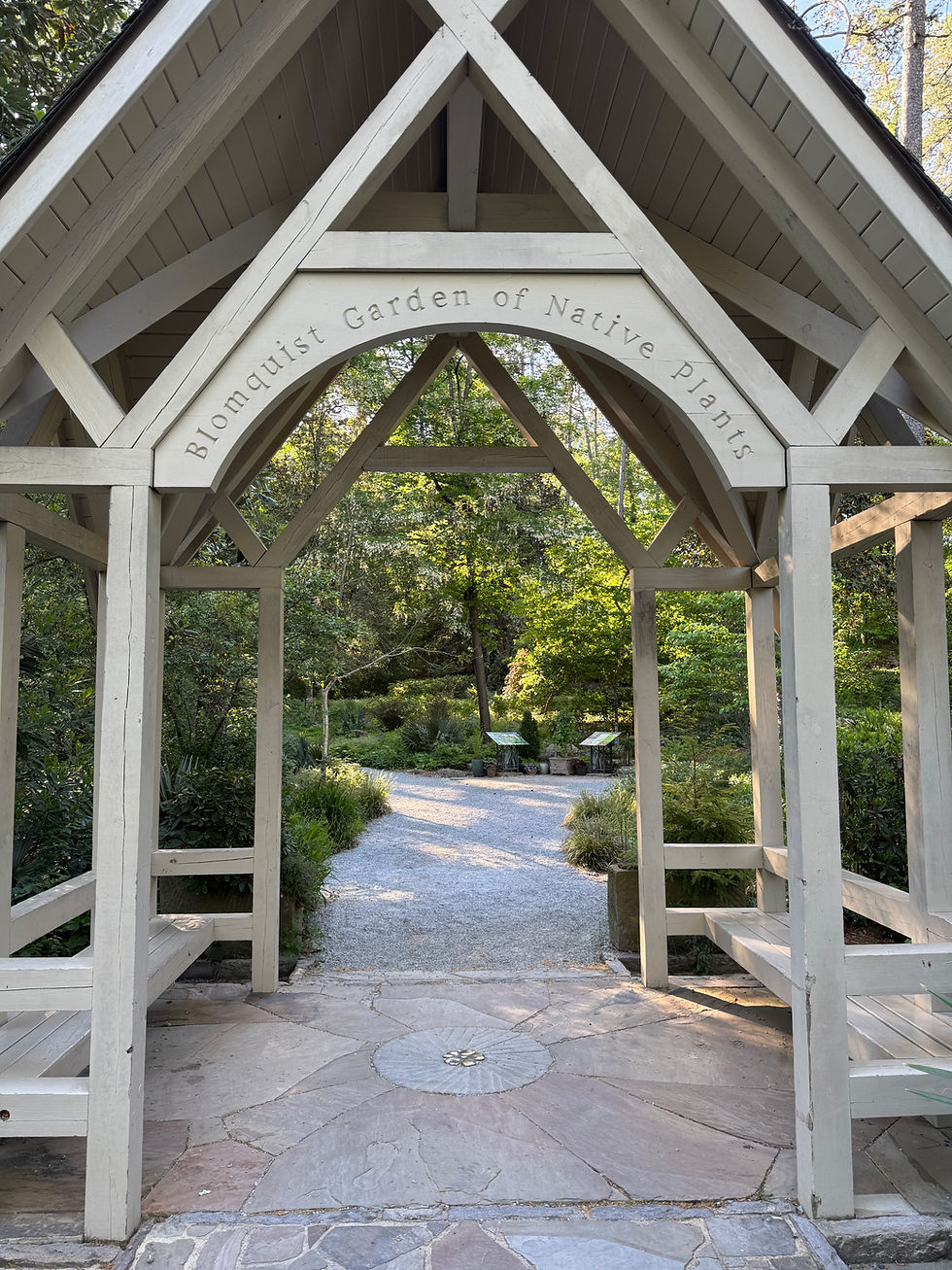
A large native plant garden in central North Carolina caught my attention for two reasons. Across the Chesapeake watershed, we plant many natives that are “native to the southeast" - think oakleaf hydrangeas. Second, we share three ecoregions with North Carolina. I thought there would be much to learn from the garden but was completely surprised by its' scale and maturity and want to share it with you. If you have visited the Sara P. Duke Gardens in Durham, please add your impressions! The entire garden encompasses 55 acres with 6.5 acres dedicated solely to native plants of the southeast.

The Blomquist Garden of Native Plants lies mostly beneath a stand of very tall loblolly and long leaf pine trees, most towering a good 60 to 80 feet above the ground. The Blomquist garden is an undulating woodland with wide paths, ponds and enchanting wood structures, largely milled from trees felled on site. Much of the garden is very mature — inkberries (Ilex glabra) and azaleas (Rhododendron) far above your head, small trees really. The gardens' origin dates to the late 1960s and is named after Duke University professor Hugo Blomquist who was a noted expert in southeastern flora and fauna.

On an unseasonably cool April morning, trilliums, other spring ephemerals and most of the azaleas had largely finished flowering. Wild indigo (Baptisia), columbines (Aquilegia canadensis) and golden alexanders (Zizia aurea) brought shady areas to life. Herbaceous perennials reached a couple of feet high. Irises (Iris versicolor) and pitcher plants (Sarracenia) along the edges of ponds were flowering and birds were in full sing mode. It was all the magic of a backyard native plant garden super sized! There is so much excellence there, from the efffective signage to the inspiring artistry. Here are a few takeaways for us home gardeners.
All the Green of Native Plants

If you garden with native plants that are straight species, there are periods of time in your garden when many of the plants are a similar hue of green. This is particularly true after the first flush of spring blooms and before the early summer flowering shrubs and perennials begin to do their thing. One common way to create more interest in your garden during these times is to add a few cultivars with wine colored or variegated foliage such as nine bark shrub 'Summer Wine' (Physocarpus opulifolius) or perennial heucheras (Heuchera). The Blomquist garden has another. It uses large stones.

Repeating stones break up the masses of green and, for lack of a better description, ground the plantings. And, much as garden designers advise to repeat plants for cohesion, the stones are repeated throughout the garden. It really works.
The Native Plant Containers

arborvitae, sedge and heuchera 
variegated yucca and heuchera
Another repeating element in this treasure trove of a garden is the use of containers throughout. The containers seemed to be placed at locations where one would want to pause, or maybe the containers asked you to pause. I am not sure. What I am sure of, is the variety of plants in containers. Perennials and trees, cultivars and straight species and so many pines! I would have never thought of that.

Long leaf pines (Pinus palustris) are very large trees. Growing them in a container would reduce their growth considerably, and while they probably wouldn’t thrive in containers for many, many years, they certainly could work for a handful of years. You would just need an appropriate permanent home for them once they outlive their containers.

pitcher plants 
christmas fern unidentified juniper
The real takeaway for me was you can try growing just about anything in a container. All those plants out there are possibilities! Formal, informal, artsy, plain - there is a style of container for everyone.
Native Plant Combinations

There were so many pairings of different textures, which is yet another way to break up a sea of green in your late spring, early summer garden. Check out this combination for shade of stoke's aster (Stokesia laevis), native to the southeast, and wild geranium (Geranium maculatum). You don't even need the flowers to create interesting contrasts.

Blue flag iris (Iris versicolor) and sensitive ferns (Onoclea sensibilis), in moist soils and dappled sun are another standout contrast of shape and texture. It is a perfect pairing for moist sites. Native iris are a tad more flexible on moisture. Blue flag iris thrive in moist soils and will grow in moderately moist soils. Sensitive ferns must have moist soils to live.
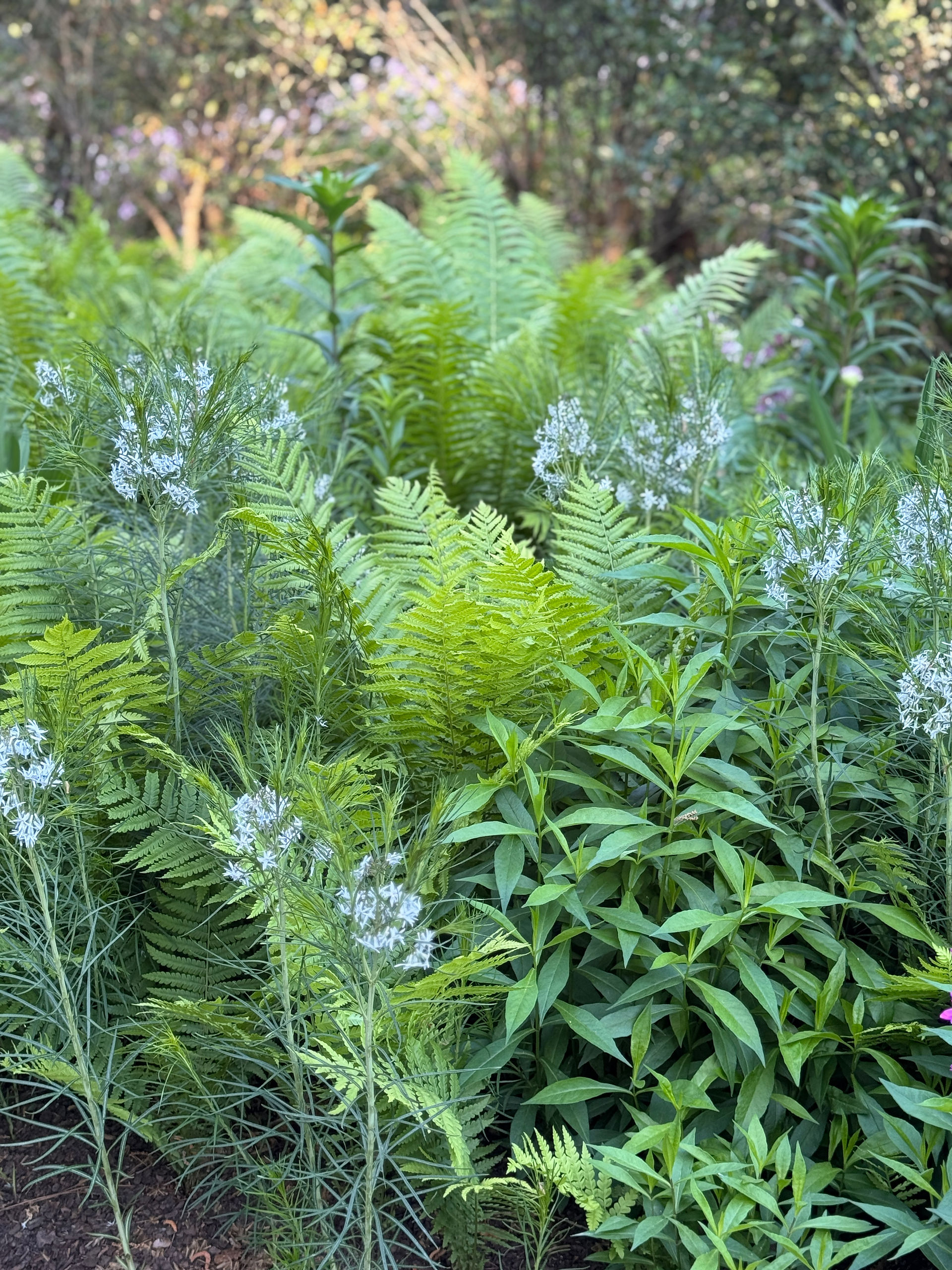
ostrich fern, bluestar, aster 
ostrich ferns, aster 
ostrich fern, bluestar
For part shade areas with soils of average moisture, this combination of ostrich ferns (Onoclea struthiopteris), bluestar (Amsonia hubrichtii), native to Alabama, and blue wood aster (Symphyotrichum cordifolium) is feathery and fanciful. This area was also planted with daffodils (Narcissus) and these native perennials easily disguise the waning daffodil foliage.

In the deepest of shade, little brown jug (Hexastylis arifolia) and green and gold (Chrysogunum virginianum) made the perfect groundcover. Little brown jug is native to the southeast, from Virginia to Florida and Louisiana. For those a bit farther north, wild ginger (Asarum canadense) would be a great alternative. Seeing how deep in shade the green and gold was and still flowering away made me realize this is one of those plants that can "tolerate" a bit of sun but really thrives in full shade. I had a drift of green and gold in my garden which slowly drifted away as its location became sunnier and sunnier!
Notable Native Plants
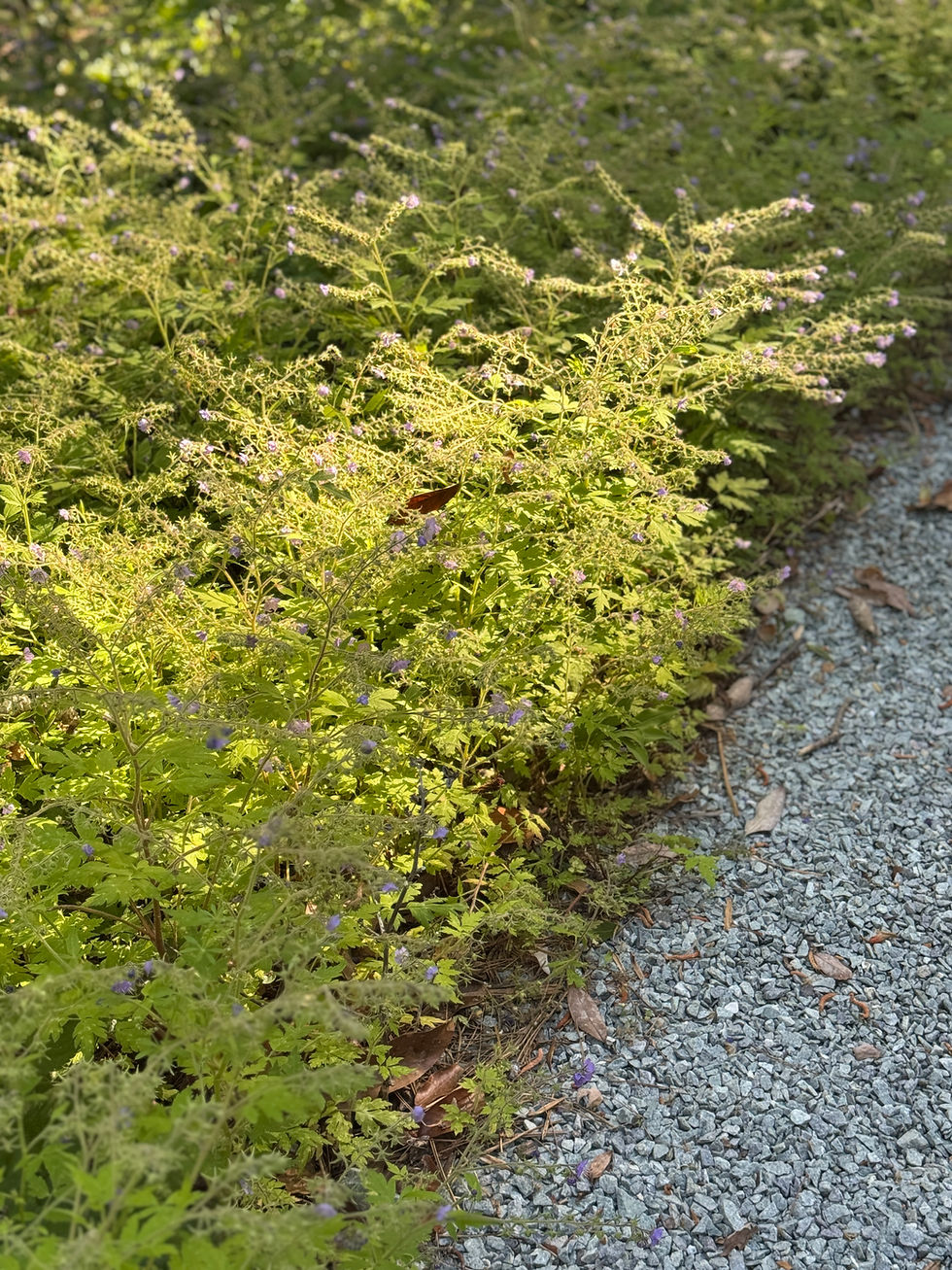
Fernleaf phacelia (Phacelia bipinnatifida) is completely new to me. Swaths of lime green foliage were so noticeable because they not only lit up shady areas, the plants were literally buzzing ... there were so many pollinators visiting, the plants were actually vibrating. And, even though the blooms had faded. Intriguing.
Mt. Cuba calls fernleaf phacelia a "relatively unknown biennial." Biennials are plants that typically grow foliage the first year and bloom and set seed the second year. Mt. Cuba also says fernleaf phacelia self sows and comes back year after year to create a continuous display. With a month long bloom time, fernleaf phacelia grows in part shade and a range of soil types. Izel Plants carries fernleaf phacelia plants from time to time and Toadshade Wildflower Farm sells the seeds. If you have grown this plant or know of other places to buy it, please do add below.

pitcher plants pitcher plant in bloom pitcher plants and iris
Pitcher plants are positively stunning. The Blomquist Garden grows a number of different types, both along the edges of ponds and in containers. They are wonderous plants year round but in bloom, wow! There are also beautiful displays of pitcher plants at the U.S. Botanical Garden in Washington D.C. and Mt. Cuba in Delaware. You can usually find pitcher plants for sale at Watermark Woods in northern Virginia and Kollar Nursery, in northern Maryland among other places. They have very specific growing and water requirements so please make sure to research or inquire before trying!
chapman's rhododendron chapman's rhododendron 
flame azalea
Mature native azaleas send forth graceful arching sprays of flowers. Even past peak bloom, they are so lovely. I know I am nuts for natives, but, objectively, our native azaleas so surpass azaleas from other countries with their elegance of structure. As I passed by these, I thought, well, the best time to plant a native azalea, was yesterday. The next best time is today. That is, if you have rich, moist soils with some acidity. If you already have azaleas, rhododendrons or laurels growing, you probably have good conditions for native azaleas.
The very pale pink azalea above is native to Florida and is said to be quite rare. Pinxterbloom azalea (Rhododendron periclymenoides) is a native azalea with pink blooms that is more common and native to parts of the mid-Atlantic.
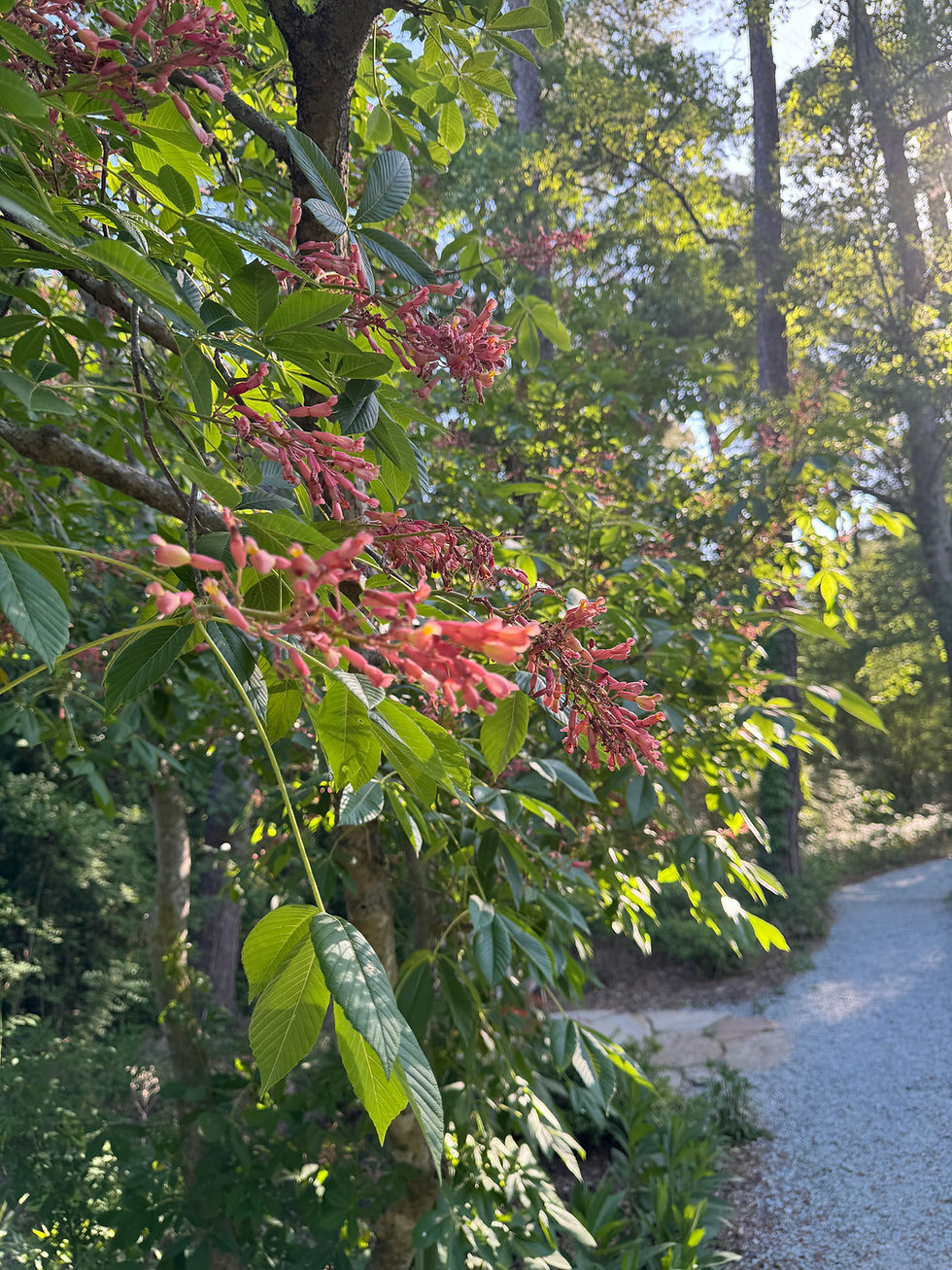
Red buckeye (Aesculus pavia), native from West Virginia to Florida, when in shade, grows with a less dense form, more arching, and along the edge of a walking path, was very striking. These trees also grow in full sun and a range of soils and, so, are quite adaptable. Growing to 20 feet in height, they are increasingly planted as street trees. In this setting though, there was nothing pedestrian about it.

woodland phlox 
bluestar
This is barely a sampling of what this garden has to offer. Should you find yourself in the Durham area, there is so much to see and learn from the Blomquist Garden of Native Plants. And yes, the sky was definitely Carolina blue!
Happy Gardening.


I was gifted Phacelia binnatifida approximately six yrs ago. I have it growing in moist shade/part-sun (Anne Arundel County, MD) and the bees just love it. It readily self sows, which is great for my open woods. It's a real showstopper every other year (I guess eventually it'll catch up). It could easily overtake a small garden bed.