


Wild about Wild Hyacinths: A Native Spring Bulb to Love
Add a native to your spring bulb mix.

Spring bulb season is here! Daffodils (Narcissus) from Europe and north Africa, tulips (Tulipa) from Europe, the middle east and Asia and grape hyacinths (Muscari armeniacum) from Europe and Asia seem to be everywhere and quite a colorful and cheerful sight.
As often is the case, a native alternative is equally as beautiful though a tad more restrained in its hue. Eastern wild hyacinths (Camassia scilloides) grow with a cluster of strappy 8 to 12"" foliage and a 2 to 3' flower stem with a cluster of pale blue lavender flowers. In the early morning sunlight, they are as captivating as any daffodil or tulip.
Pollinators are captivated as well. Wild hyacinths are visited by a number of bees, flies, wasps and some butterflies. Always a good thing when both gardeners and pollinators are captivated!

wild hyacinth buds 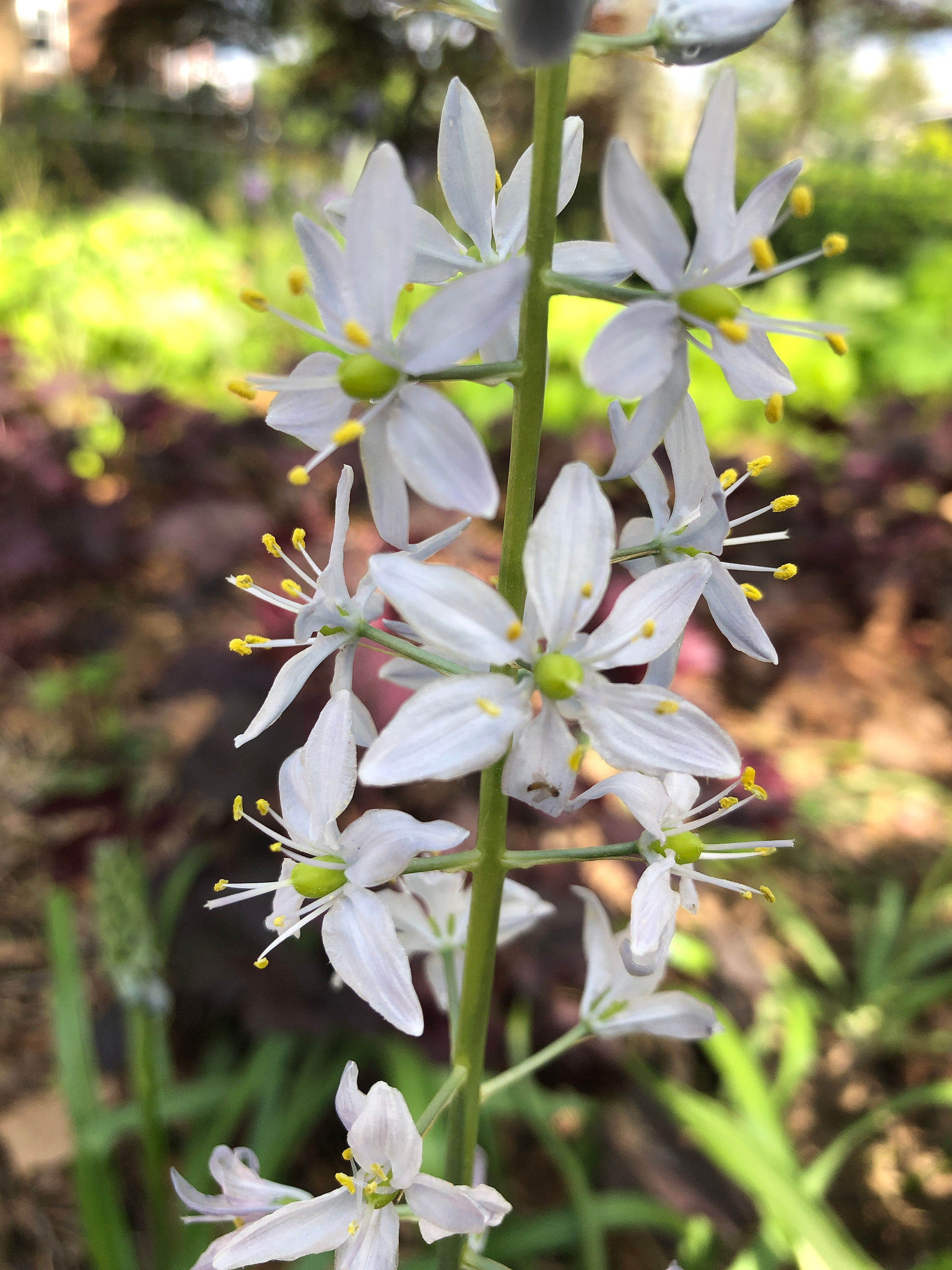
wild hyacinth flowers 
wild hyacinth flowers
Growing Wild Hyacinths
Wild hyacinths thrive in moist soils and full sun and also grow in dappled shade and average moisture soils. The bulbs tolerate clay soils nicely. Typically emerging in late March to early April, wild hyacinths flower in the central part of the Chesapeake watershed in later April. The sunnier the spot, the earlier they will bloom.
As with most bulbs, wild hyacinths look best when planted in drifts. Tossing bulbs on the ground creates a natural looking drift. Each bulb should be planted 3" deep. Experts advise these do spread by reseeding but quite slowly. In my garden, over 6 years, I have not seen any noticeable reseeding. The clumps do slowly become more robust.

It is always important to leave foliage from the bulb, even after it has finished flowering and is turning yellow. The foliage feeds the bulb providing energy to the bulb before it goes dormant. This enables the bulb to grow a bit stronger and successfully flower the following spring. Because you want to allow the foliage to die back naturally, you may want to consider planting the hyacinths among other perennials that already have foliage like eastern columbine (Aquilegia canadensis) or that bloom a bit later such as golden alexanders (Zizia aurea).
The Missouri Botanical Garden advises not to disturb bulbs once they have been planted to get the best growth. My take is wild hyacinths are generally fairly slow growing plants but so worth the wait.
Wild Hyacinths Native to the U.S.
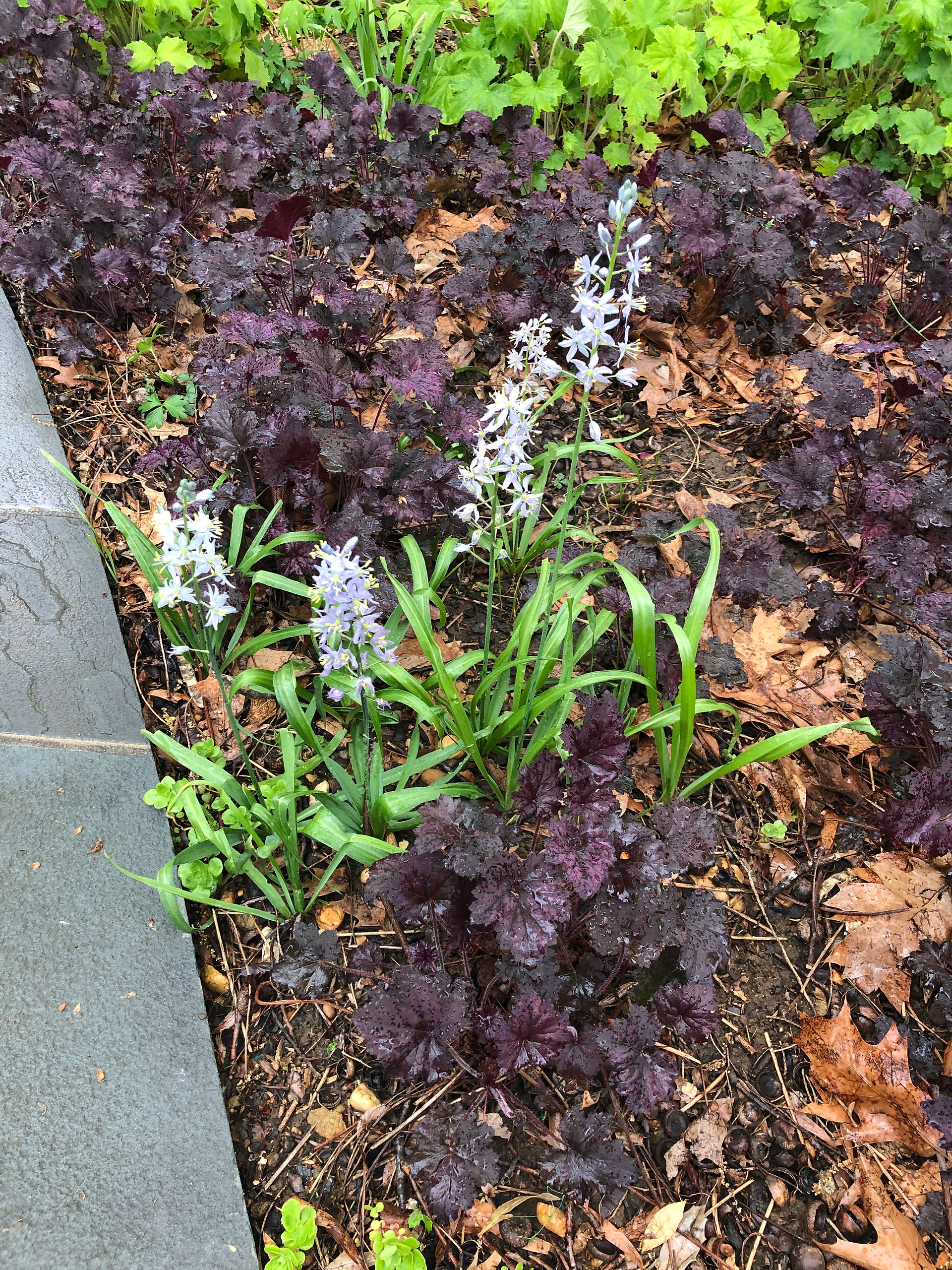
Eastern wild hyacinth 
western wild hyacinth
There are several wild hyacinths native to the United States. Eastern wild hyacinth (Camassia scilloides) has a lavender flower and is native to the eastern United States. Southern wild hyacinth (Camassia angusta) also has a lavender flower and is native to the central and southeastern U.S. Common camass (Camassia quamash), native to the west, has deeper blue colored flowers.
Sourcing
These bulbs can be challenging to find and are typically sold and shipped after they go dormant so late summer and fall. I have typically found them for sale from on-line nurseries. Because they are only shipped once dormant, on-line inventories usually say 'out of stock' and allow you to sign up for availability notifications which are sent when the bulbs are dormant and ready to be shipped.
Another thing to be cognizant of is most of the wild hyacinths offered for sale are Camassia quamash, native to the northwest United Stares. Eastern camassia, the "scilloides" type, are harder to find but available. Sources currently offering availability notifications for Eastern camassia include:
Flowering spring bulbs are always a delight. Native flowering spring bulbs, all the better! If you are growing wild hyacinths, please do share!
Happy Gardening.


I'm not growing wild hyacinths now, but now I want to.