


From Hill Country to Bay Country: What We Can Learn about Native Plants from Texas!
Updated: May 14
Lady Bird Johnson Wildlife Center: Shared Plants and Sustainability

When both my niece and my best friend from high school, both new to gardening, relocated to central Texas around the same time, I had two gardening-related thoughts. First, I would have to relinquish my efforts to encourage their gardening interests since I know nothing about gardening in Texas. Second, I hoped to visit the Lady Bird Johnson Wildflower Center!

Texas bluebonnets 
Virginia bluebells
Texas springs forward with fields of annual Texas bluebonnets (Lupinus texensis). Meanwhile, the woodlands of the Chesapeake Bay Watershed are awash with perennial Virginia bluebells (Mertensia virginica) this time of year. These regions are vastly different, yet they share some experiences.
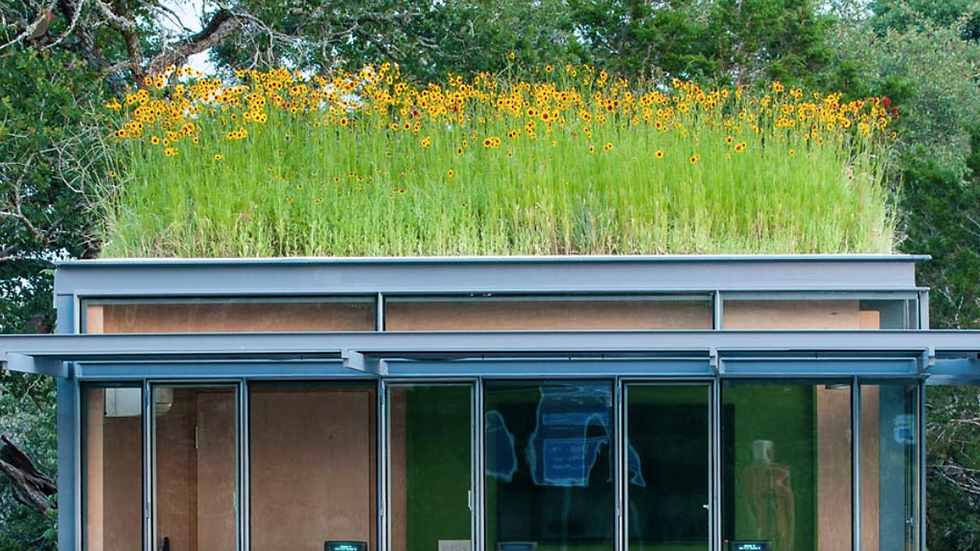
Years ago, when I started this blog, I linked every plant mentioned to one of two sources: the Missouri Botanical Garden or the Lady Bird Johnson Wildflower Center. The Missouri Botanical Garden has a world-renowned data hub of plant information with details about plants from around the globe. In contrast, the Lady Bird Johnson Wildflower Center boasts the largest database of native plants in the United States, with just over 25,000 species. While I now also link to the Mt. Cuba Center or North Carolina Extension Service Plant Toolbox for mid-Atlantic specific information, the Lady Bird Johnson Wildflower Center remains the place for the most accurate and detailed information about native plants. So, I was thrilled to visit!
The Lady Bird Johnson Wildflower Center is located in Austin, Texas, which falls in Zone 9. I quickly learned that Texas is ecologically diverse, with 12 eco-regions, while Maryland has only 3. Some parts of Texas are humid, while others are bone dry. Some areas receive just 10 inches of rain a year, while others get over 50 inches! So, what on earth could we gardeners in the mid-Atlantic learn from Texas gardening? I found a surprising wellspring of ideas!
Native Plantings
The 284 acres of grounds at the Lady Bird Johnson Wildflower Center include cultivated areas, savannas, an arboretum, and wild lands. The core gardens focus on gardening with native plants. I discovered some fantastic ideas for plants that Chesapeake gardeners may already know.
Coralberry

Coralberry (Symphorocarpos orbiculatis) shrubs can be a bit of a conundrum for the average gardener. The small, deep fuchsia-colored berries in fall add an unusual pop of color, yet the shrubs themselves are somewhat scrubby. They spread by suckering and can form a thicket, which can be challenging depending on your space. The stems and foliage tend to blend into the background. However, this planting beneath a tree is a fantastic way to grow coralberries!
Massing the plants shows them to their best advantage. The thicket of coralberry shrubs provides a soft landing spot beneath the tree for newly hatched insects. The growth of the thicket is contained by a rock wall and walkway, making this the perfect use of coralberry.
Cross Vine

Cross vine (Bignonia capreolata) is a vigorous grower. The sunny red and orange trumpet-shaped flowers are delightful, but if you let the vine loose on a fence, it’s easy to lose track of it. At the Lady Bird Johnson Wildflower Center, cross vines were growing up and across walls. This makes it much easier to keep track of and see when a prune is needed. Encouraging it to grow up and out beautifully showcases the flowers.
Golden Ragwort

Golden ragwort, native to parts of Texas, is also found in the Chesapeake watershed. Like here, golden ragwort is celebrated for its early spring bloom and long flowering period. It thrives in deep shade and dappled sunlight. Planting it among rocks seems to highlight the cheerful flowers perfectly.
Verbena

Verbena (Glandularia canadensis) is an annual, or sometimes a perennial, wildflower. Often in garden centers, I have seen purple verbena sold as an annual plant that blooms all summer and is frequently labeled as a "US native." I was never sure where the bright purple flowers originated. It turns out they are native from Virginia south to Florida and west to Texas and Oklahoma! Native annuals can be harder to find, so learning that this lavender straight species is native to parts of Virginia makes it a great addition to your garden if you’re looking for native annuals.
Northern Sea Oats

Northern sea oats (Chasmanthium latifolium), one of our native grasses, thrives in shade. Planted en masse along this path, they show how beautiful perennials can be, even after winter. When planted in moist conditions, northern sea oats will spread rapidly. However, planting them in drier conditions reduces their tendency to spread.
Virginia Creeper

Much like the cross vine, the vigorous Virginia creeper vine is also grown up walls. This technique—growing these fast-growing vines on walls—makes it easier to see where the branches are heading. This greatly reduces maintenance and the chance they will run amok in your garden. The vine is just leafing out in March.
For the Love of Oaks

Here on the East Coast, thanks to the research and work of Dr. Doug Tallamy, many gardeners are well-versed in the powers of oaks. Their ability to host over 500 types of insects is legendary. Believe it or not, oaks seem to be on an even higher plane in Texas. Texas has 53 species of oaks, which make up 74% of the oaks in the United States. Holy smokes—that’s a lot of oaks!
The Lady Bird Johnson Wildflower Center features a shop and gallery centered around nature. There, you can find a piece of art that speaks volumes about the strength of oaks in our world. Titled "Under the Oak, January," artist Clair Gaston created a botanical drawing of the things she found in January beneath an oak she walks by every day. It’s so simple yet so powerful.
You can view more of Clair's work here. Many thanks to Clair for allowing me to share a photo of her brilliant piece!
Sustainability

Many practices at the Lady Bird Wildflower Center focus on minimizing our impact on the world—from water-wise techniques to leaving leaves and so much more. Last fall, I read a new book called Gardens of Texas. I wanted to share it with you, but I hesitated, wanting to stay true to our shared purpose of gardening with native plants in the mid-Atlantic.
As I learned from my visit to the Lady Bird Johnson Wildflower Center, sometimes getting a fresh perspective can renew your eye, inspire ideas, and remind you of the creativity of gardeners. Pam Penick's book does all of this and more. Yes, it features plants of Texas, but I highly recommend it because Pam beautifully writes about each garden and gardener. At the conclusion of each discussion, she summarizes takeaways we can use in our own gardens. While the plants may differ in Texas, our need to conserve and reuse water, lighten our footprint on the environment, and enjoy creative spaces is very much the same. Gardens of Texas is one of the best gardening books I’ve read, presented concisely and simply!

mulhy grass 
raised beds at LBJ Wildlfower Center 
bluebonnets
As for my dear niece and fantastic friend from high school, they have adapted beautifully. My niece is growing veggies in raised beds, while my high school friend and her husband have fully embraced native plants. They even acquired a jackhammer for digging new holes for plants. That’s right—a jackhammer! Not a shovel or an auger. It makes one appreciate gardening in hard clay and construction fill. And it just goes to prove that gardeners will make it work!
Happy Gardening!


We had verbena growing in the arroyo on the north side of our house in Santa Fe (mountains of northern NM) in my childhood. It wants to be all sorts of good places! As for Packera, I use it abundantly here in NE Ohio, too. It is often surprising to see the wide native ranges of our favorite native plants.
Thanks for this, Shari! Love the Lady Bird Johnson Wildflower Center. Also, I need to get a copy of Pam's book!
Inspiring post. I am like a kid in a candy store "I want to do this and I want to do that!" when I look at garden pics like these and creative uses of items (like the bench made of a plank and logs). And the beds themselves, a lot of which seemed elevated/raised/ edged along pathways in interesting ways. I am musing and just wish i could do it all!!! Alas, I havent the space to (or since I also havent the back, perhaps I should say thank goodness I haven't the space!) Thank you, Shari, for sharing your visit to this treasure for gardeners (and native plants and the wildlife they depend on).