


Native Perennials That Look Great All Summer Long!
- 1 day ago
- 4 min read
The key to long lasting lushness in your garden.

To have your garden looking fresh all summer long, foliage is key. While it is glorious to have perennials flowering through the season, it is a process to get there. If you do get there, those flowers will look even better if interspersed with green foliage, both to set them off visually, and to give your eye a place to rest.
Plants that best fit this niche need to be versatile with light, soil and moisture. If you have not yet landed on your best foliage perennials, the best thing to do is to experiment with a couple and note those that really thrive in different parts of your garden. Then, you can make your selection and repeat, repeat, repeat! This will also add cohesiveness to your garden design.
These three perennials pass the versatility test and remain freshly green all summer long and stay upright. Many perennials look lush in May and June but once the summer heat settles in, foliage can begin to tire or flop. These perennials, on the other hand, have real staying power.
Amsonia
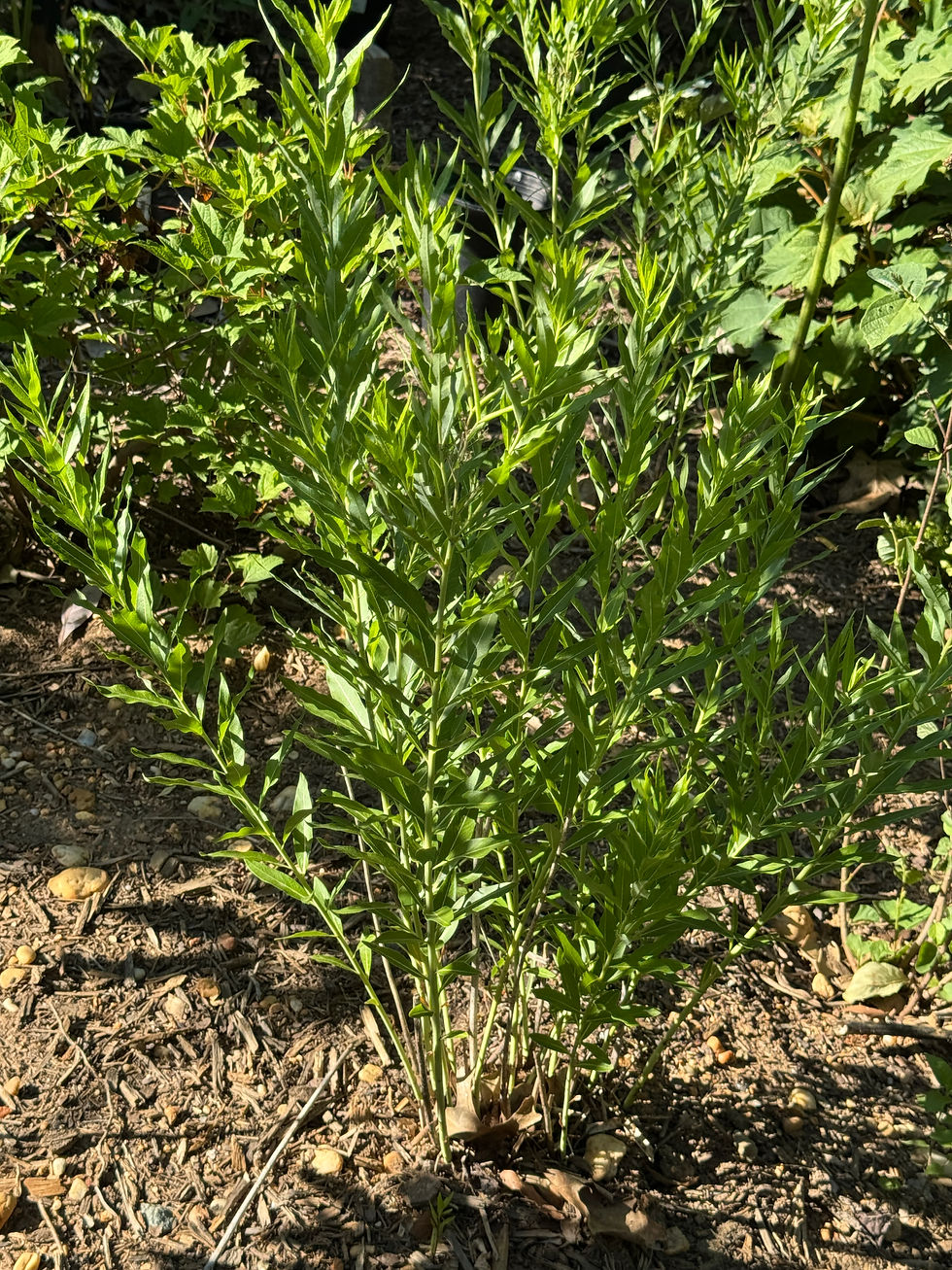
Amsonia (Amsonia tabernaemontana), also called eastern bluestar, emerges early in spring and blooms with small clusters of tiny blue flowers in May. Plants are vase shaped. Amsonia take four to five years to mature to their full width and height, around 4 feet tall, so patience is required. It's totally worth the wait though. Amsonia thrives in full sun and part sun and are very drought tolerant.
The graceful foliage stays strong all summer. These plants sway beautifully in the breeze, work well in groups or interspersed between other perennials to fill spaces in flower beds. In late fall, amsonia turn to the brightest of golds. The plants eventually turn brown in winter yet often remain upright providing winter interest.




Two amsonias are commonly found in both gardens and nurseries. The amsonia native to the Chesapeake is amsonia tabernaemontana which has wider, but still slender, leaves. A finer leaved amsonia, amsonia hubrichtii, is native to Arkansas. In my experience, amsonia can be transplanted when young but the larger they get, the more difficult it is to successfully transplant them. Penn State extension notes amsonia havs both a tap root and dense fibrous roots so it's likely the tap root that makes the more mature plants hard to transplant.
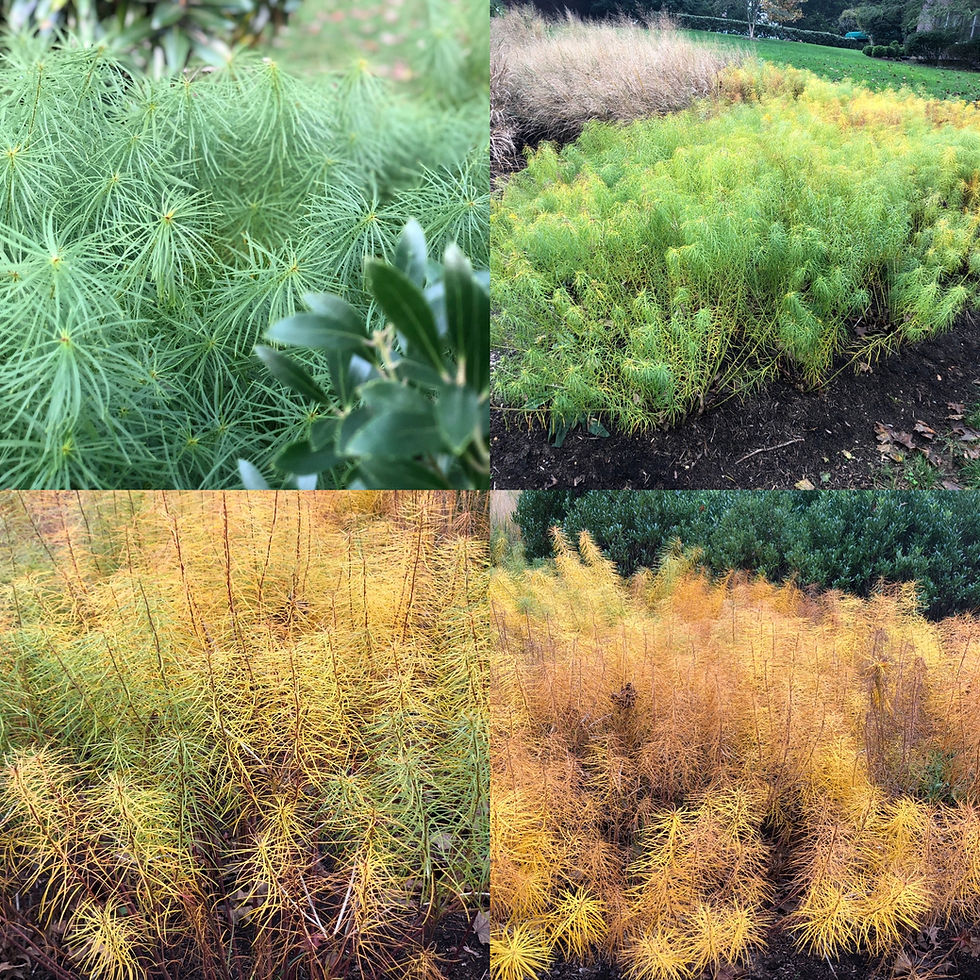
Amsonia do wonderful things in your garden -- heads of pale blue flowers in spring, light green foliage in summer and a sunburst of color in fall. No maintenance is really required. Their greatest attribute though is that summer long fresh foliage.
Indian Pink

Indian pink (Spigelia marilandica) foliage emerges fairly early in spring. Blooms of red and yellow tubular shaped flowers appear in late May and early June. The plants will bloom sporadically after the first burst of flowers. Mature plants are a couple of feet high and clumps widen as they mature.


This perennial grows equally well in full sun and full shade in my garden. If indina pinks are in full sun, they need at least average moisture soils. These plants also must be watered regularly for the first year or two until they establish. Once they do, they are maintenance free. I have frequently read that indian pinks do not transplant well. I have transplanted them numerous times with no problem at all.
The upright medium green colored foliage stays strong all summer into fall. These plants also work well as a mass or interspersed among other plants to eliminate bare spots. They do not have special fall color and are dormant in winter. These plants are also fairly slow growers. I started mine from plugs and it has taken years for them to mature. This is one of the perennials I would recommend buying in a quart or gallon size to start. The flowers are definitely attention getters. The foliage is reliable all summer long.
Heuchera 'Autumn Bride'

Heuchera 'Autumn Bride' (Heuchera villosa 'Autumn Bride') foliage greens up in very early in spring and lasts through late fall, and often through winter. Along the way, the 3 foot high and wide mounding plant provides springy lime green color early in the season which morphs to a slightly darker green in summer. In late summer, wand like white flowers emerge and last into September. These plants do not require any maintenance.

When planted en masse, the flowers are stellar swaying in autumn breezes. When interplanted among other plants, they fill in gaps seamlessly. They are easy to grow in range of light from part sun to shade and moisture conditions. The leaves will crisp up in the plants are in full sun. These plants can easily be transplanted.





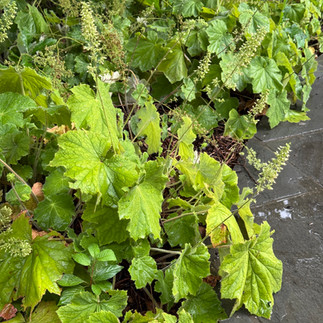
Flowers in August is a great thing. The large leaved foliage throughout the summer is an even greater thing. This is such an easy to grow plant and clumps do spread and can be divided.


Knitting, Cohesiveness, Repetition
These three terms pop up in garden design conversations a lot. When I first started gardening, I tried to create areas of different types of plants or colors or styles. I have learned along the way, even if you want to have areas that evoke different moods or looks in your garden, repeating some plants truly does bring the entire garden together. There is only so much the eye can take in. Repeating plants allows your eye and mind to rest. For me, I have a couple of perennials that I repeat as much as I can and then one type of shrub with which I have started to do the same. To me, it makes a noticeable difference. There is no one way to design a garden though, so you may have different ideas.
For sure though, having plants that need no maintenance or attention and stay green all summer long is a big plus! Do you have particular plants you rely on for green foliage all summer long? If so, please do share with the rest of us!
Happy Gardening.


When you show the spigelia in full shade, how do you define full shade? I read somewhere (maybe here?) that full shade still has a couple hours of sun.