


Native Substitutes for the Most Popular Plants
Nudging perceptions of popularity!

A few weeks ago, I came across a magazine (rare I know!), featuring the best gardens of the south. There was a section listing the best plants to bring year round appeal to your garden. I picked it up, curious as to whether any native plants made the cut. Yes, they did! Redbuds (Cercis canadensis), dogwoods (Benthamidia florida), red maples (Acer rubrum) and American holly (Ilex opaca) along with black-eyed susans (Rudbeckia fulgida) and coneflowers (Echinacea). Those are some great ones but there are so many more! Here is a look at the most popular garden plants and potential native substitutes that can provide the same zing for your year round garden and loads more ecological benefits.
Evergreen Azaleas

evergreen azalea 
azalea 'Pinxterbloom"
Evergreen azaleas (Rhododendron indicum) are popular throughout urban and suburban gardens and are largely native to Asia. Prized for their evergreen foliage and bright spring colors, they have been planted liberally. They grow best in moist acidic soils in part sun to shade.
On the native front, while our region's azaleas aren't evergreen, they surpass azaleas from afar in most every category. Native azaleas grow in architectural shapes and bloom with intricate, elegant flowers in shades of white, pale pink and soft orange. Pinxterbloom azalea (Rhododendron periclymenoides), for example, has pale pink flowers. Native azaleas, like their Asian counterparts, prefer moist acidic soils in dappled to full shade.
The trade-offs: super bright colors and evergreen foliage versus delicate colors, larger flowers and architectural shapes.
Saucer Magnolia

saucer magnolia 
sweet bay magnolia
Saucer magnolias (Magnolia 'Soulangeana') bloom before they leaf out in very early spring. Pale yellows, pinks and deep fuchsia flowers are positively gorgeous. Those flowers last but a short while and a sudden cold night can take them down quite quickly.
I think of the native sweet bay magnolia (Magnolia virginiana) as the steady cousin of saucer magnolias. Flowers appear after the tree has fully leafed out and are simpler yet still beautiful in shades of creamy white with a light lemony fragrance. Sweet bay magnolias bloom in late spring and sporadically in early summer. Those flowers then produce striking seed pods with bright red seeds. Often times, the foliage is semi-evergreen and persists through winter. Sweet bay magnolia can be either multi or single trunked. Like a saucer magnolia, sweet bay magnolia bark is smooth and gray. Sweet bay magnolia is a multi-season interest tree.
The trade-offs: the showiest of flowers versus a year round tree with ecological benefits.
Chinese Snowball Viburnum

Chinese snowball viburnum 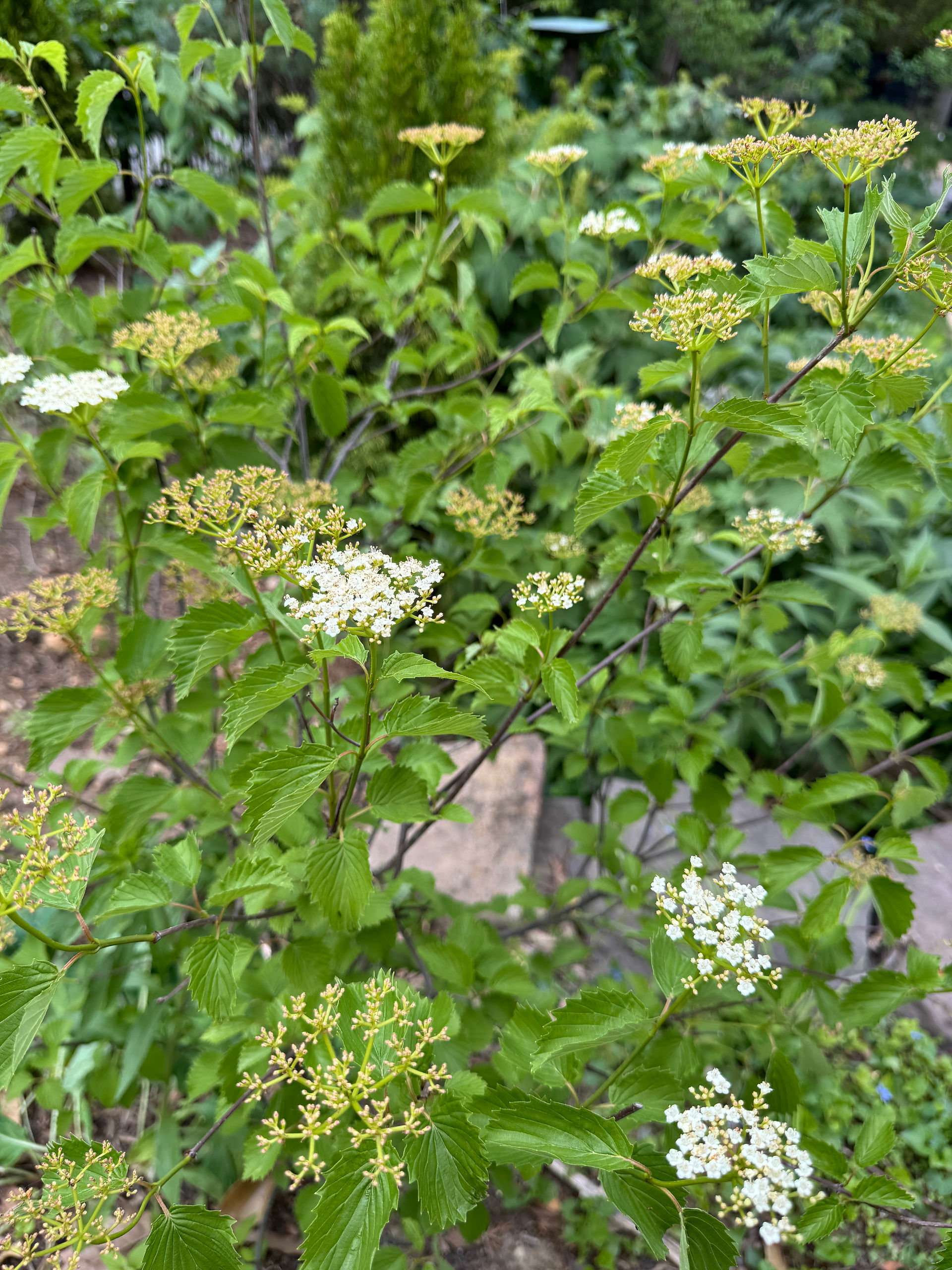
arrowwood viburnum
Chinese snowball viburnum (Viburnum Macrocephalum 'Sterile') are popular for spherical white flowers that look a lot like hydrangea flowers. Native viburnum such as arrowwood viburnum (Viburnum dentatum) have less striking white flowers and from an ecological and design standpoint, do so much more. Flat clusters of white flowers emerge in mid-spring. While not as fancy as Chinese snowball flowers, the flat flowers are a buffet for pollinators. The flowers fade to cream and then morph into small berries, green at first and then deep blue. Birds adore these berries. Fall colors range from yellow to orange.
The trade-offs: big blousy spring flowers versus more modest flowers, blue berries, fall color and ecological benefits.
Snapdragons

snapdragons 
penstemon 'husker red'
Snapdragons (Antirrhinum Majus), native to Europe, are annual flowers loved for their range of colors from whites to yellows, oranges and pinks and deepest reds. They are often used as a tall spiky cutting flower. Native penstemon (Penstemon digitalis 'Husker Red) have similarly shaped white flowers and are perennial. Plant them once and you don't have to think about it again.
The trade-offs: plant every year with a wide range of colors versus planting once and white flowers for a shorter bloom period with ecological benefits.
Tall Bearded Iris
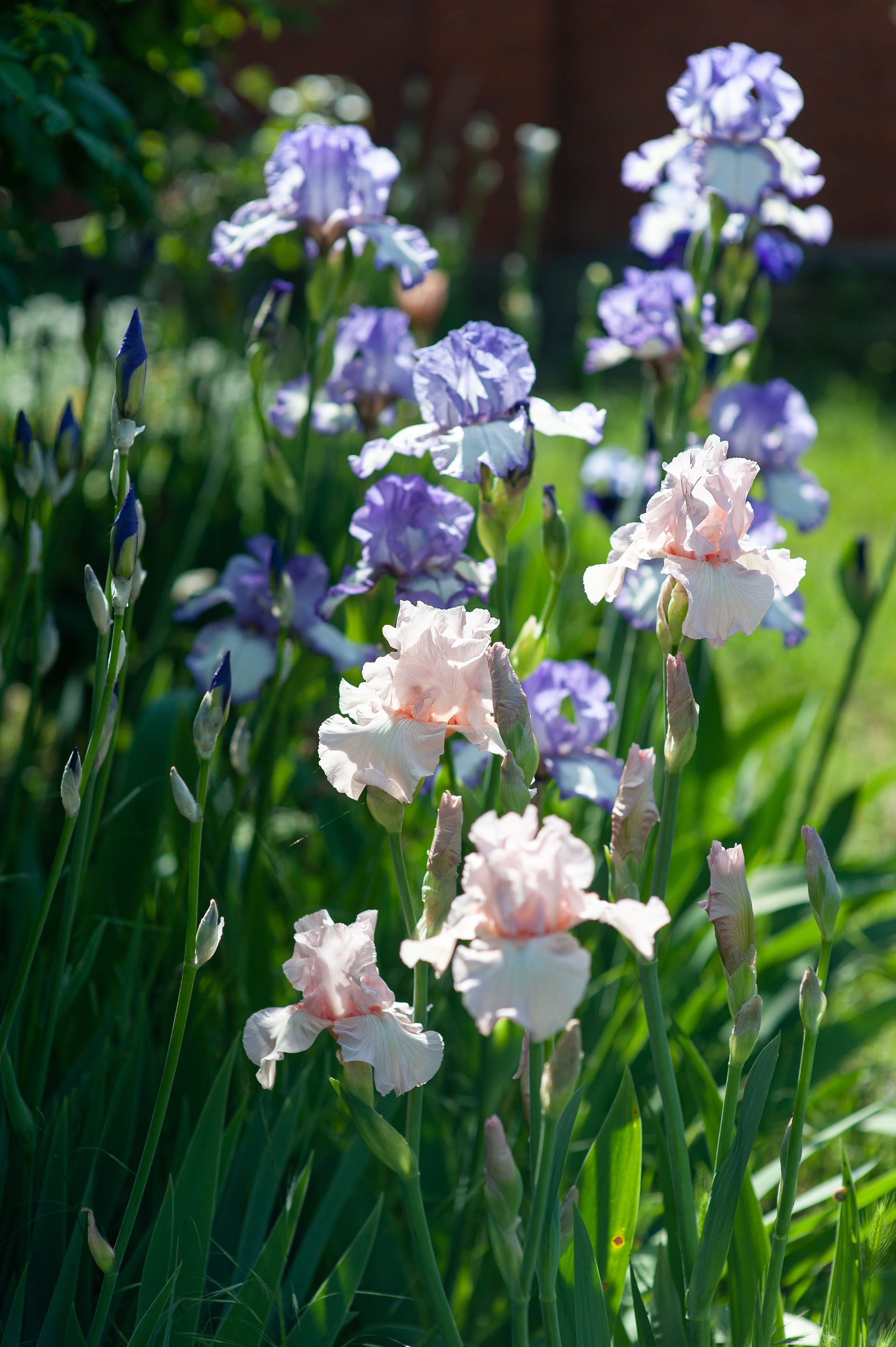
bearded iris 
blue flag iris
Bearded iris (Iris germanica) are the more elaborate iris flowers, originally native to eastern Europe, and have been hybridized many times over. Our native iris, blue flag iris (Iris versicolor) are more streamlined and elegant in their simplicity. Both types of iris have fairly short bloom periods. The strappy foliage though is excellent for adding texture and contrast with other plants. Both like full sun and average to moist soils.
The trade-offs: a range of colors on larger flowers versus smaller purple flowers and ecological benefits.
Daffodils
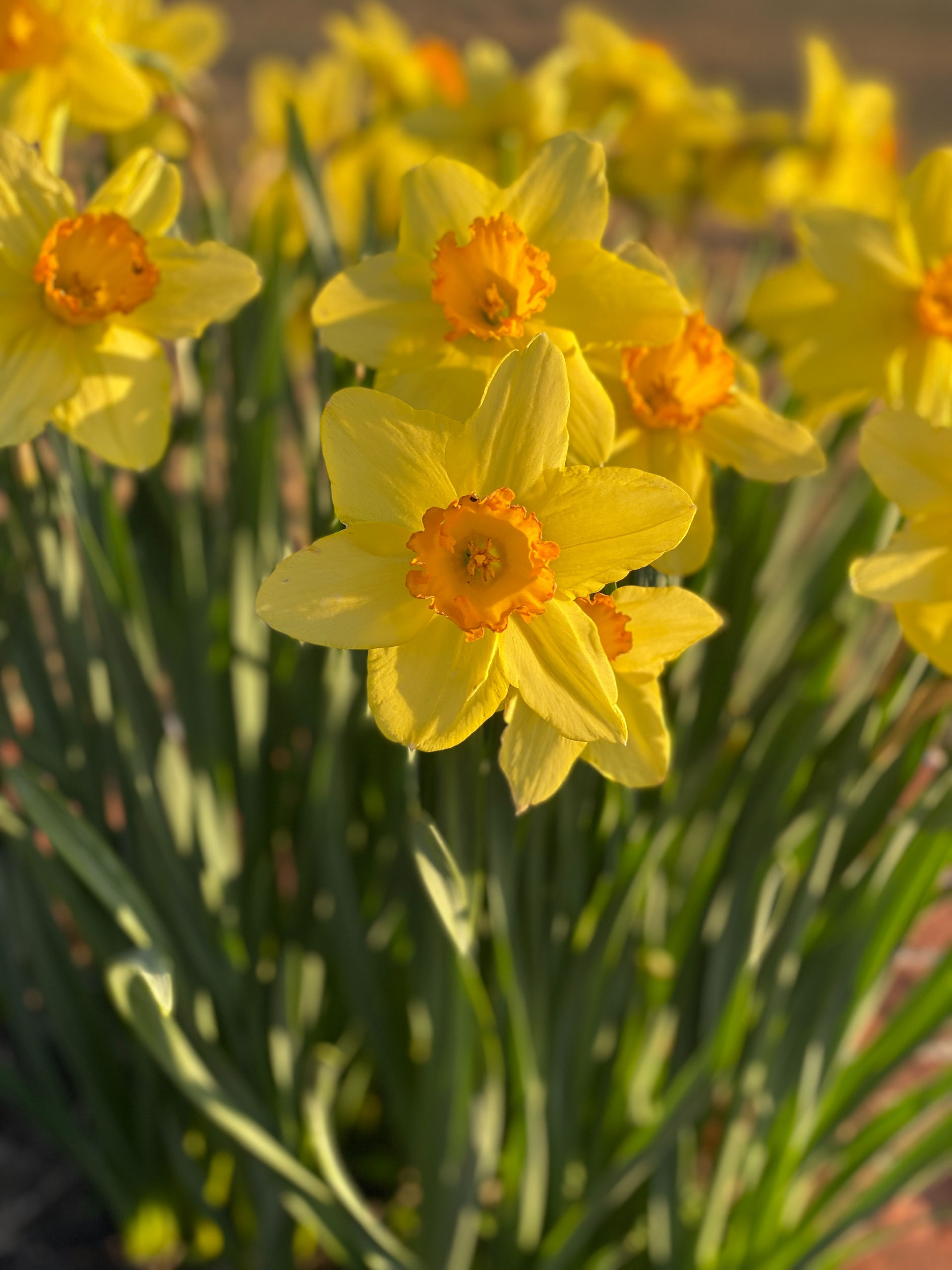
daffodils 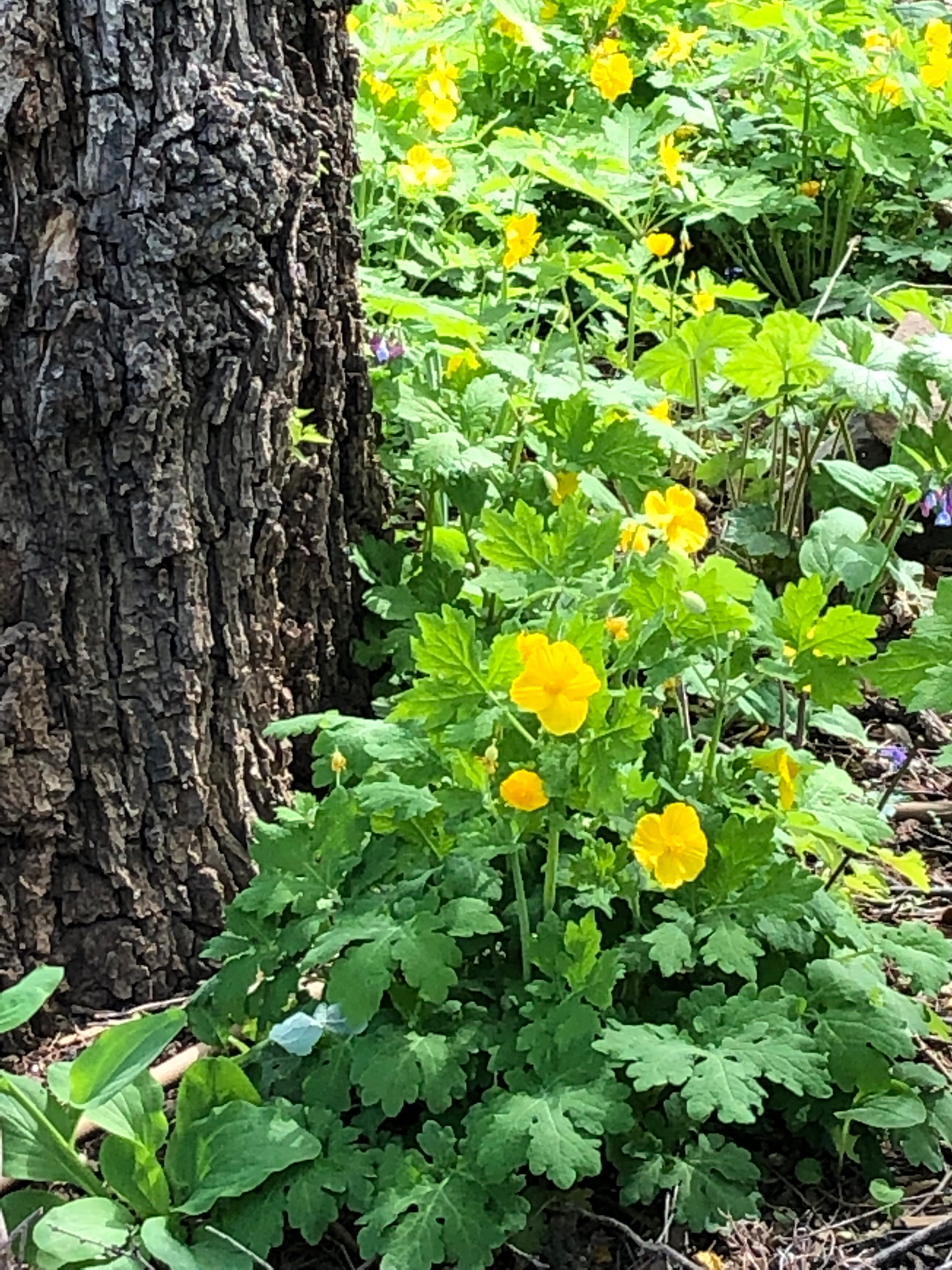
wood poppies
Daffodils (Narcissus) come from Europe, Asia and Africa. Planted as bulbs, they will spread and if the foliage is allowed to mature before cut back, they will spread and come back every year. It is possible to plant early, mid and late spring blooming varieties for a very long bloom period. Our native wood poppies (Stylophorum diphyllum) bloom in early spring with bright yellow flowers. Wood poppy foliage is lobed and feels almost fern like. In shady, moist areas, the foliage will last most of summer. In sunnier, drier areas the foliage will turn yellow in early summer and die back.
The trade-offs: so many varieties with strappy foliage after the blooms fade versus one long blooming type of flower with elegant foliage and ecological benefits.
Okame Cherry
okame cherry 
serviceberry
Cherry trees are iconic harbingers of spring the world over it seems. Okame cherries (Prunus 'Okame') are the cherry trees with the slightly larger pink flowers. Native serviceberry trees (Amelanchier laevis) bloom right around the same time with many, many clusters of smaller white flowers. Serviceberry flowers turn to red berries by May and are beloved by birds. Serviceberry trees also have brilliant fall color in the reds and oranges.
The trade-offs: larger pink flowers versus clusters of small white flowers, loads of red berries and fall color.
Gardenia

gardenia 
fringe tree
Gardenia (Gardenia) native to Africa, Australia and Asia, are evergreen shrubs that bloom in summer and fall with highly fragranced white flowers. They grow best in dappled shade with moist, acidic soils. Fringe tree (Chionanthus virginica) blooms in late spring with clusters of white flowers that are lightly scented. Female trees also produce blue fruits in late summer. Fringe tree has yellow fall foliage.
The trade-offs: evergreen shrub with long bloom period of heavily scented white flowers versus early flowering deciduous tree with lightly scented flowers, some fruits and good fall color.
Crepe Myrtle

Crepe myrtle trees (Lagerstroemia indica) are unique for their late summer long lasting flowers and textural bark in winter. Native to Asia, crepe myrtle trees need full sun to bloom and are so widely planted in the south, that many just assume they are native to the southeastern U.S.
Finding a native alternative to this late summer flowering tree always stumps me. I am hoping you can help me out!
French Hydrangea

french hydrangea 
wild hydrangea
French hydrangea (Hydrangea macrophylla) are the hydrangeas with the large pink, blue or white blooms. These shrubs need afternoon shade and moist soils. Acidity of the soils determines whether a french hydrangea flowers in tones of pink indicating soils are more neutral or tones of blue indicating more acidic soils.
Native wild hydrangea (Hydrangea arborescens) bloom with white flowers in summer. They grow best in moist soils and dappled shade and tolerate moderate soils once established.
The trade-offs: More variety of flower color versus white flowers and ecological benefits.
Shrub Roses

shrub rose 
carolina rose
Shrub roses (Rosa 'Radrazz' KNOCK OUT) are the very common deep pink red roses that bloom prolifically from early spring through fall in part shade and full sun. They are a very low maintenance shrub. Native roses like carolina rose (Rosa carolina) only bloom once in early summer. The flowers produce small rose hips in fall and spread by suckering. Single flowers make it easy for pollinators to reach the pollen.
The trade-offs: continuous bloom and low maintenance versus a single bloom, spreading shrub with rose hips in fall and ecological benefits.
Chaste Tree

Chaste tree (Vitex agnus-castus) is a fast growing, sun loving shrub or tree with blue flowers for most of summer. It is native to the Mediterranean and east to Pakistan. This tree is noted for its true blue flowers.

wild indigo 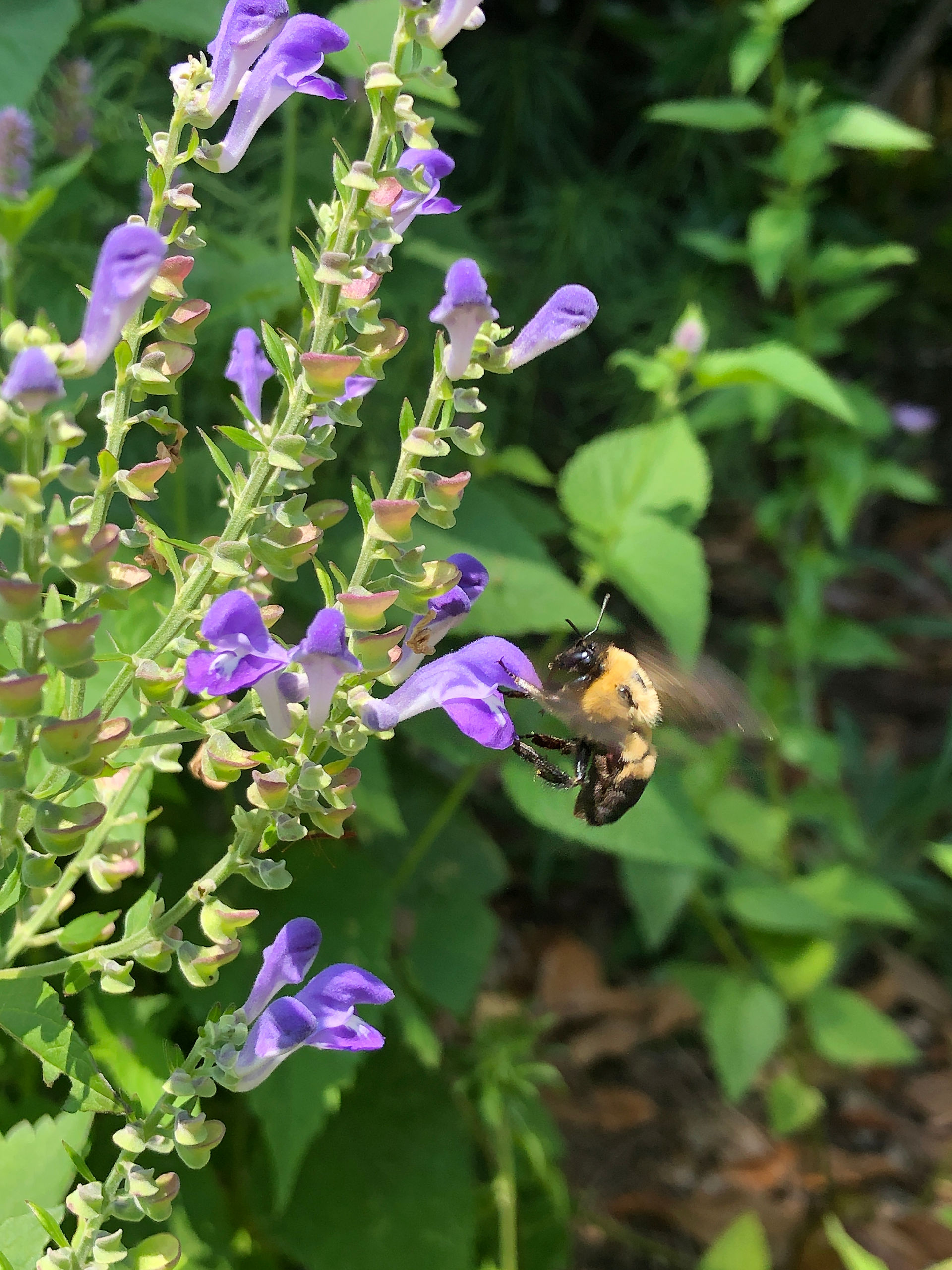
skullcap 
blue hyssop 
blue lobelia 
blue mist flower 
asters
If you are after the color blue, many native perennials have blue flowers: wild indigo (Baptisia australis), skullcap (Scutellaria incana), blue hyssop (Agastache foeniculum), blue lobelia (Lobelia siphilitica), blue mist flower(Conoclinium coelestinum) and asters (Symphiotrichum oblongfolium).
The trade-offs: a long flowering tree versus a series of flowering perennials.
Chrysanthemum

chrysanthemum 
asters
Chrysanthemum (Chrysanthemum morifolium) are native to Asia and can be grown as perennial fall flowering plants though most typically these appear in garden centers in fall in full bloom. Native asters (Symphiotrichum oblongfolium) are available in purples and blues and there are shorter and taller varieties. These perennial asters have a long bloom period, provide loads of seeds for birds over winter and reliably return year after year.
The trade-offs: a greater range of colors versus a reliable perennial with blue, pink, purple and lavender flowers and ecological benefits.
Camelias

camelia 
mountina laurel just coming into bloom
Camelias (Camelia) are winter blooming evergreen shrubs with large flowers in whites, yellows, pinks, orange and reds! These hail from southeast Asia. The many, many varieties generally thrive in moist acidic soils in part shade to shade. If it were just the evergreen shrub well suited to moist acidic soils you were looking for, you could turn to native mountain laurel (Kalmia latifolia) or rosebay rhododendrons (Rhododendron maximum) but those, of course, bloom in spring, not winter. This is one of those ornamental plants that really does not have a comparable native.
The trade-offs: flowers in winter versus flowers in spring
Trading
Choosing plants for our gardens should be a fun thing. If one of these most popular plants speaks to you, make the trade-off and add it to your garden! At the same time, creating a new aesthetic where we are adding more natives to lists of popular plants will benefit our environment tremendously. The more our family, friends and neighbors see native plants, the more likely they will be to seek them out themselves. And, of course, once you add native plants to your garden and experience first hand a garden coming alive with insects, birds and more, you will only want more native plants. It's all a process!
Happy Gardening.


Great comparisons. Having planted a few foxgloves with many penstemons, I would say that penstemon is a very similar effect, esp. p. Digitalis and p. Smallii. I was also happy to find that there is a native climbing hydrangea, Decumaria Barbara, which I think has even better foliage. Also, many kinds of native wisteria, including ones with long, pendulous blooms, and white varieties.
False Indigo Bush is a good substitute for chaste tree, though blooms in spring instead of summer.
Blue Mealy Sage is an under appreciated native and even thought its used as an annual by many landscapers, in the south its perennial! As for long blooming pink shrubby (though not a replacement for crepe myrtle can give long bright summer color, definitely salvia greggi :) For a forsythia replacement, witchhazel and carolina bush pea!
Southern magnolia also fills the garden with that marvelous lemony fragrance.