


One Way to Build Your Year Round Native Garden: Thinking Ahead!
Updated: May 20
Planning and planting for next spring now.

I don't know about you but when I was new to gardening, once spring rolled around I sprang into action, shopping at the nursery or garden center for any natives I could find. When you shop at garden centers in spring, you find a lot of plants in bloom! Many are blooming way ahead of when they naturally would because they have been coddled in greenhouses, encouraged to bloom asap -- all the more enticing to gardeners who have emerged from winter looking for plants. It's no surprise that plants that sell the fastest are those that are in bloom. And I have to say, each spring, even though I know better, I am tempted to head to a garden center to get some of that spring bling.
The reality though is the plants that grow best in our gardens, are planted in smaller sizes, when they are not in bloom. The oft repeated adage about the the first year plants sleep, the second year they creep, and the third year they leap is very true. Plants do not really thrive until they are well established. The goal when you put a plant in the ground is to get the plants to develop strong root systems. If they are flowering, the plant's energy is focused on the flowers; we are better off if the plant is focused on the roots.
So now is a good time to plan and plant for next spring. Plants will have finished flowering and you can transplant or plant new spring flowering plants and they can put more energy towards their roots.
Ideas for the Native Spring
Classic Combo

arrowwood viburnum 
blue star 
wood phlox cultivar
A viburnum shrub underplanted with flowers is a great spring combination in sun to part shade in most any type of garden. Arrowwood (Viburnum dentatum) or possumhaw (Viburnum nudum) viburnum would work equally well. Both bloom with white flowers that eventually form berries. Blue star (Amsonia tabernae montana) is a native perennial and garden standout for its foliage which is upright and fresh green all summer long. That foliage turns a bright yellow in fall. The small blue flowers in spring are sometimes barely noticeable but when planted between a shrub and phlox, they pop. Blue star is now commonly available in dwarf forms, as shown in the top photo, staying shorter than the straight species which easily reaches 4 feet in height when mature. The pink cultivar of wood phlox (Phlox divaricata) makes for just the right addition.
Moody Maroons and Reds

Many of the native spring blooming plants give us white, lavender and yellow flowers. Lovely combos for sure. This part of a native garden at the National Cathedral in Washington D.C. goes in a different direction in late spring. Combining red flowers and maroon foliage is a bold move!
The shrub is a cultivar of nine bark (Physocarpus opulifolius). This cultivar changes the color of the foliage, something scientists say makes it less likely there is any benefit to native insects and birds. The straight species native has green foliage. While the color change isn't the highest ecological choice, the darker color, design wise, adds depth and dimension. Since the large planting already includes many straight species plants, choosing a cultivar here makes sense. The flowers are perennial indian pinks (Spigelia marilandica). Indian pinks bloom in May and, in my garden, sporadically for the remainder of summer. Indian pinks are versatile in that they can grow and bloom in full shade and sun.

penstemon 'husker red' 
Carolina allspice 
paw paw flowers
For a more subtle pairing, combine maroon flowers with white flowers, so prevalent in native shrubs in spring. For more maroon color, look to penstemon 'Husker Red,' (Penstemon digitalis 'Husker Red') a perennial flower. Carolina allspice shrubs (Calycanthus floridus) and paw paw trees (Asimina triloba).
Violets: Let Them Run!

Violets (Viola sororia) have popped up in each of the five gardens I have been lucky enough to garden in - from a 12' square highly urbanized space to a three acre wooded spot. Accepting them as a flowering perennial for shade rather than as a weed was one of my most freeing gardening moments! Today, they are sold in nurseries. Violets - you have come a long way. They really do create the most magical carpet of flowers right out of the gate in spring. Flowering violets are an excellent pollen source for early emerging insects. In shady, moist areas, violets will retain their heart shaped foliage for most of summer. In sunnier areas, they will go dormant until the following spring.
If you don't want violets in your lawn or you only want them in a certain area, you can dig up the rhizomes and move those to where you would like a cluster of violets. One thing is for sure; once you allow violets to grow, you will get more violets. As the Mt. Cuba Center says "once established in an area, it is difficult to completely remove." The rhizomes spread underground and ants carry the seeds above ground. All in all, it's an easy way to get the "living mulch" so many gardeners are after. Living mulch helps keep soils cooler and moist and prevents weeds from emerging.
Shady Blues and Bright Yellows

Virginia bluebells (Mertensia virginica) combined with any number of yellow, spring flowering perennials are a gift for shade that keeps on giving. Virginia bluebells and all of these yellow flowering perennials self seed and spread. Plant a small patch and let it grow overtime. It's easy care and a generous dose of spring bling when you most need it.
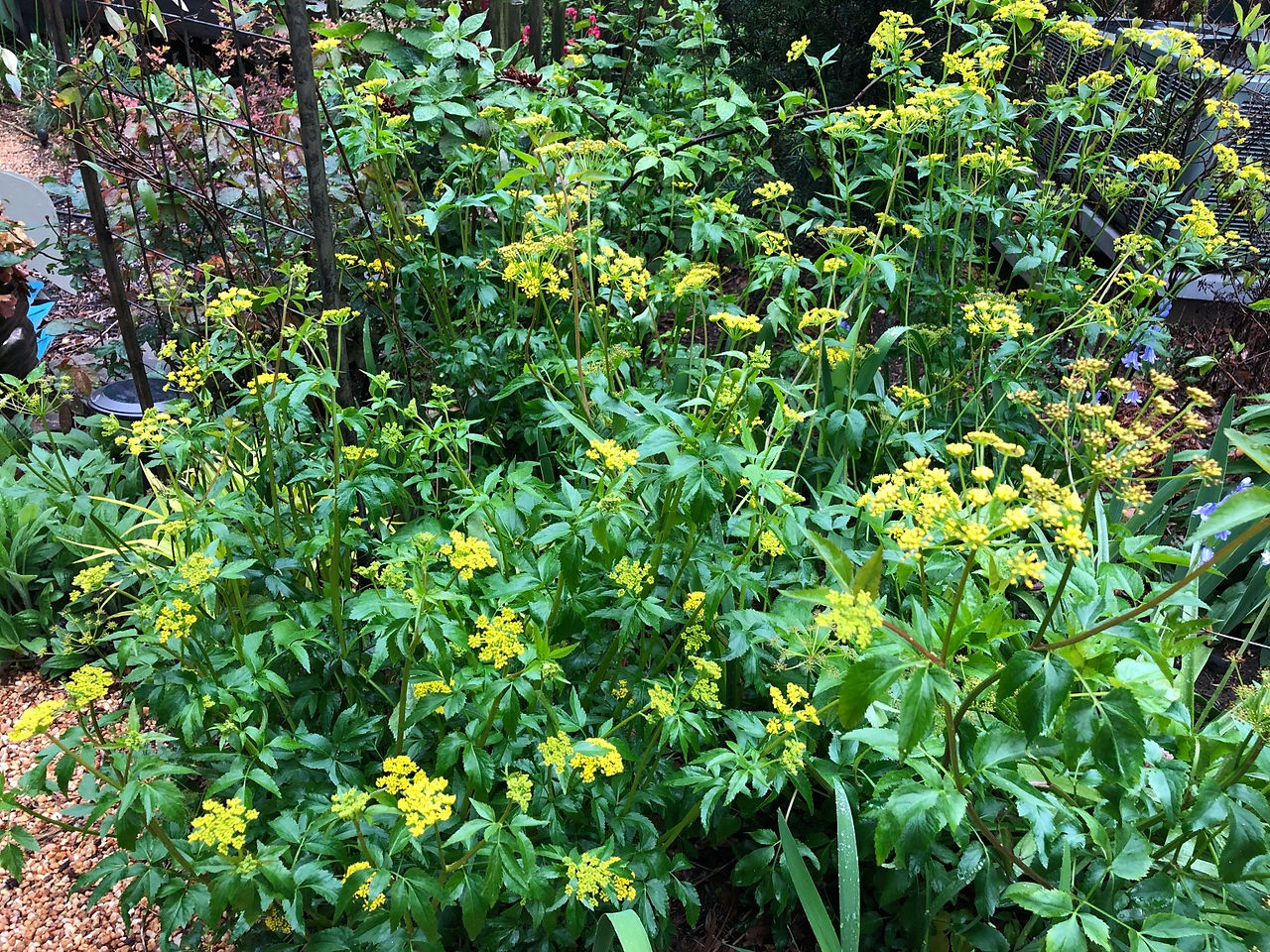
golden alexanders 
golden ragwort 
wood poppies
While these yellow flowering perennials all thrive in moist shade, they will also grow in part sun and in drier soils. They all spread by seed and clumps grow larger each year. The more sun and the drier the soils, the less vigorous the spreading , in my experience. Yours may differ!
When you are busy and looking forward to summer, it can be challenging to look a couple of seasons ahead. Getting in that frame of mind makes it easy to gradually build a year round garden. So whether you let some of those violets just do their thing this summer or seek out some spring blooming ephemerals, perennials or shrubs to add to your garden now, you will be well on your way to a stronger year round garden!
Happy Gardening.


Another point to make about planning for next spring is to get your plants in the fall this year. Planting in the fall is easier on plants because the days are cooler and usually wetter than in late spring or summer. (One exception to the fall planting rule is Virginia bluebells, which are mostly sold in spring because they are dormant in fall.) I plan to get a bunch of plugs this fall to establish soft landing areas around the trees in our front yard. By the time spring comes around, their roots should be established and the plants should have a nice head start to help them through the hot summer to come.
Bluebells are one of those plants that add an extra layer of texture and pair beautifully with almost every color in a spring garden!