


Fall is Calling: And It's Last Call at Many Native Plant Nurseries
An ideal time to plant.

Ask any seasoned gardener the latest date they planted and most will have a tale of getting bulbs or that long forgotten purchased perennial in the ground in December or January. In many parts of the Chesapeake Watershed, planting in early winter is just fine. So long as the ground is not frozen, you can plant. That makes mid-October look like prime planting season and it is! Plants are not putting on new growth due to decreased day length and instead, energy goes into the root zone, helping plants get well established.
This is also the time of year many of our native plant nurseries are reaching the end of regular retail hours. While a number are open year round, an equal number are not. This is our last chance to support these small businesses and help reduce their over wintering inventory. Buying plants is a tough job but someone's got to do it! In all seriousness, if you are able, this is an excellent time to head out to your favorite nursery. You might find a sale or two and all that fall color is ablaze. Our support of these nurseries really does matter. They are competing with online sales and many do not have the additional winter income from holiday merchandise sales. All that aside, fall is as good a season as it gets for our native plants. They are stars in fall.
Looking for a few good ideas?
Here are some plants that come to top of mind. It seems as if every garden can take a few more of these. If you have other favorites, please share in the comments!

Oakleaf Hydrangeas
These shrubs are four season plants but fall is their true moment of glory. Foliage turns orange, mahogany, red, yellow and sometimes an inky blue. It all depends on the weather that year but one thing is for sure. That color is always glorious. Straight species hydrangeas (Hydrangea quercifolia) grow to 8 feet or more. If you have limited space, look for cultivars that are smaller sizes. I have recently seen ‘Pee Wee’, ‘Ruby Slippers’ and ‘Munchkin’ for sale - all smaller cultivars of the straight species. Tuck one in a bare spot - it would be hard to go wrong unless you have deer pressure. They grow in shade and sun.
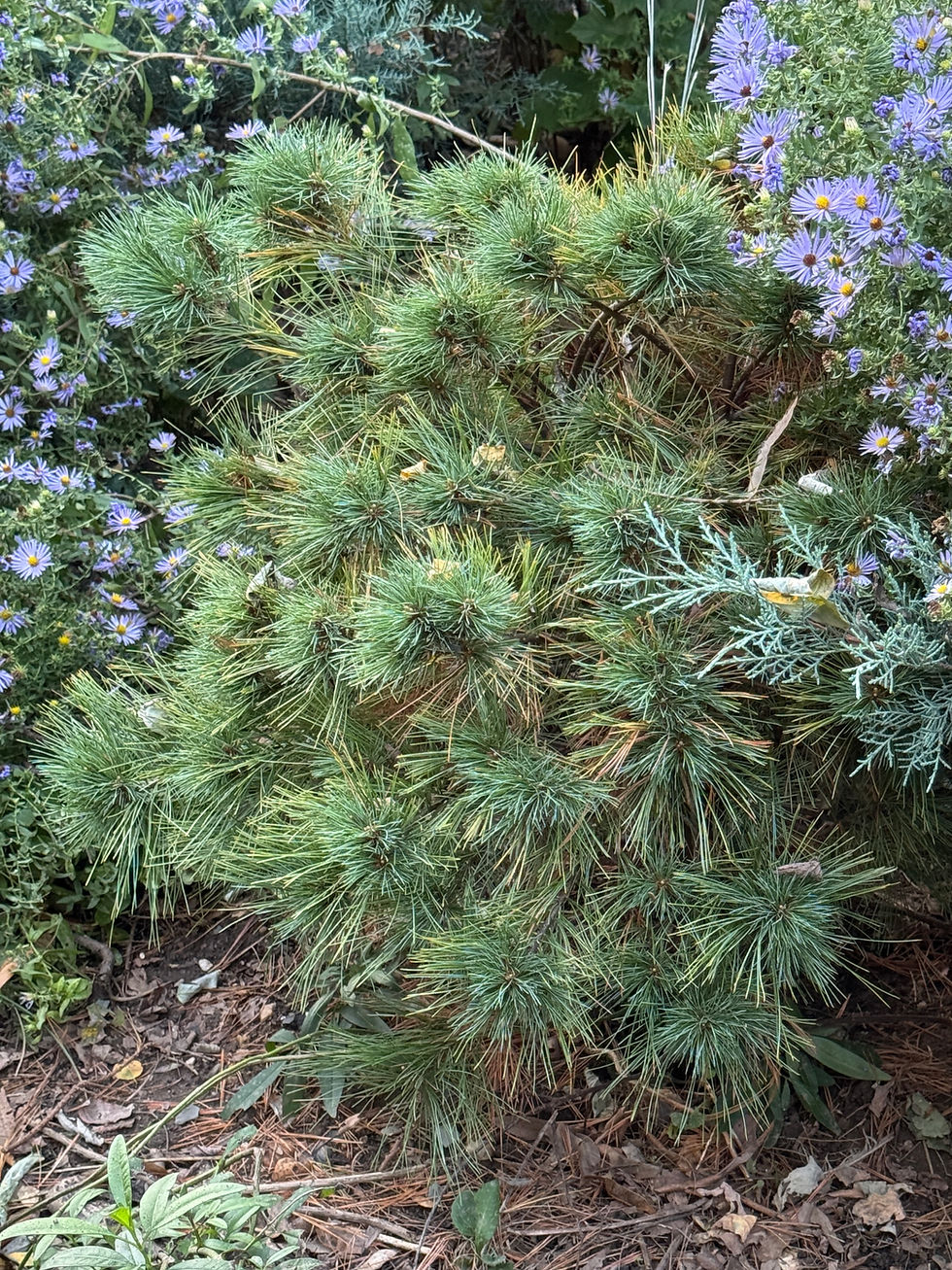
Small Evergreen Cultivars
These small evergreens can be planted among perennials and during summer, you will barely know they are there. Once deep winter arrives, you will be oh so glad they are there. Even shorter statured evergreens provide much needed color on our coldest days. Smaller cultivars like dwarf white pine (Pinus strobus 'nana') and small globes of northern white cedars like (Thuja occidentalis Hetz's Midget' ) make significant additions to winter gardens.

Asters
To me, the best time to select asters for your garden is when they are blooming. There are a lot of native asters out there: tall ones, more compact ones and asters that grow flowers on long stems above rosettes. It can be challenging to keep them all straight which is why I like to see them in bloom to get a sense of their flowers and growth habit. Once fall arrives, you can't have enough asters. They extend color in your garden deep into fall with a long season of bloom.

Evergreen Sedges
Covering bare ground with evergeen and semi-evergreen plants helps protect soil and keep moisture in the ground. The semi-evergreen sedges are perfect for this. Blue wood sedge (Carex flaccosperma) and seersucker sedge (Carex plantaginea) are two that are commonly available, spread slowly once established and are evergreen to semi-evergreen in the center part of the Chesapeake Bay watershed.

Amsonia
Like a tree, the best time to plant amsonia was yesterday. Why? It is slow growing. Narrow leaf amsonia (Amsonia hubrichtii) is native to Arkansas and wide leaf amsonia (Amsonia tabernaemontana) is native to the Chesapeake. Plan on four years for a plant to really get established. Because these plants develop a deep tap root, they don't transplant well. Once the plant matures, you will be glad you planted it. It needs no care, is completely drought tolerant and provides lush foliage all summer and shining gold color in fall.
What are your fall favorites?
Happy Gardening.


I also love the amsonias and in my garden they are totally deer resistant. In autumn I always appreciate the native grasses: Panicum virgatum, little bluestem, and river oats are colorful and displaying attractive seed heads in my garden. I think grasses and evergreens may establish better when planted in the spring or early fall in our region.
My calico aster and bluestem goldenrod are still blooming. This was a good year for Virginia creeper to make it up the trees, and the vines are gorgeoos red right now, and the spicebush has turned golden. It's looking good out there!
Hi, Shari! Right now I am loving the varied leaf colors of my Virginia sweetspires— depending on where they are placed in the yard, their leaves turned darker ruby tones or shades of bright scarlet, orange and yellow. My Oakleaf hydrangeas have not really begun to color much yet, and I don’t anticipate a big show from them since they don’t receive as much sun. I agree that one cannot have too many asters. I aim to add more shade tolerant goldenrod and white and blue asters for my drier, shadier side so as to give that area a bit of color and pollinator activity. I’m also very excited about some “Suwannee” blue eyed grass I’ve ordered. Happy gardening!