


Native Gardens in Fall: Design Tips
Yellows, reds, purples and more.

A friend, steeped in all things agriculture, occasionally reminds me in China, where he lived for a time, people celebrate a fifth season. It comes after summer but before the full glory of fall. Looking at this native garden at Hillwood Estate, Museum and Garden in Washington D.C., the notion of a fifth season resonates. The transition is upon us but touches of summer still linger.
Hillwood Gardens added this native garden several years ago. Set among the tall deciduous tree canopy at the back of the property, you can miss it if you don't know it is there. There are many things about this native garden in fall that offer inspiration for us home gardeners. All of the native plants are widely available at native plant nurseries and most garden centers: dogwood trees (Cornus florida), inkberry (Ilex glabra), red twig dogwoods (Cornus sericea) and fothergilla (Fothergilla latifolia) shrubs and perennials like joe pye weed (Eutrochium fistulosum), asters (Symphyotrichum), goldenrods (Solidago), turtleheads (Chelone lyoni) and more.
Neat Edges and a Destination for Your Fall Native Garden

While this native garden is definitely on the naturalistic style side of things, it has an order to it. The path, generously wide and crisply edged, takes you on a journey to a seating area. We don't all need a ten foot wide path but a gently curving path wide enough for two with a distinct border is always a good add to a home garden and if you are concerned about plants getting a little too wild, this will help. Garden designers say again and again, every path should lead to something -- a place to sit is ideal.
Punctuating with Color in Your Fall Native Garden

fothergilla 
dogwood tree 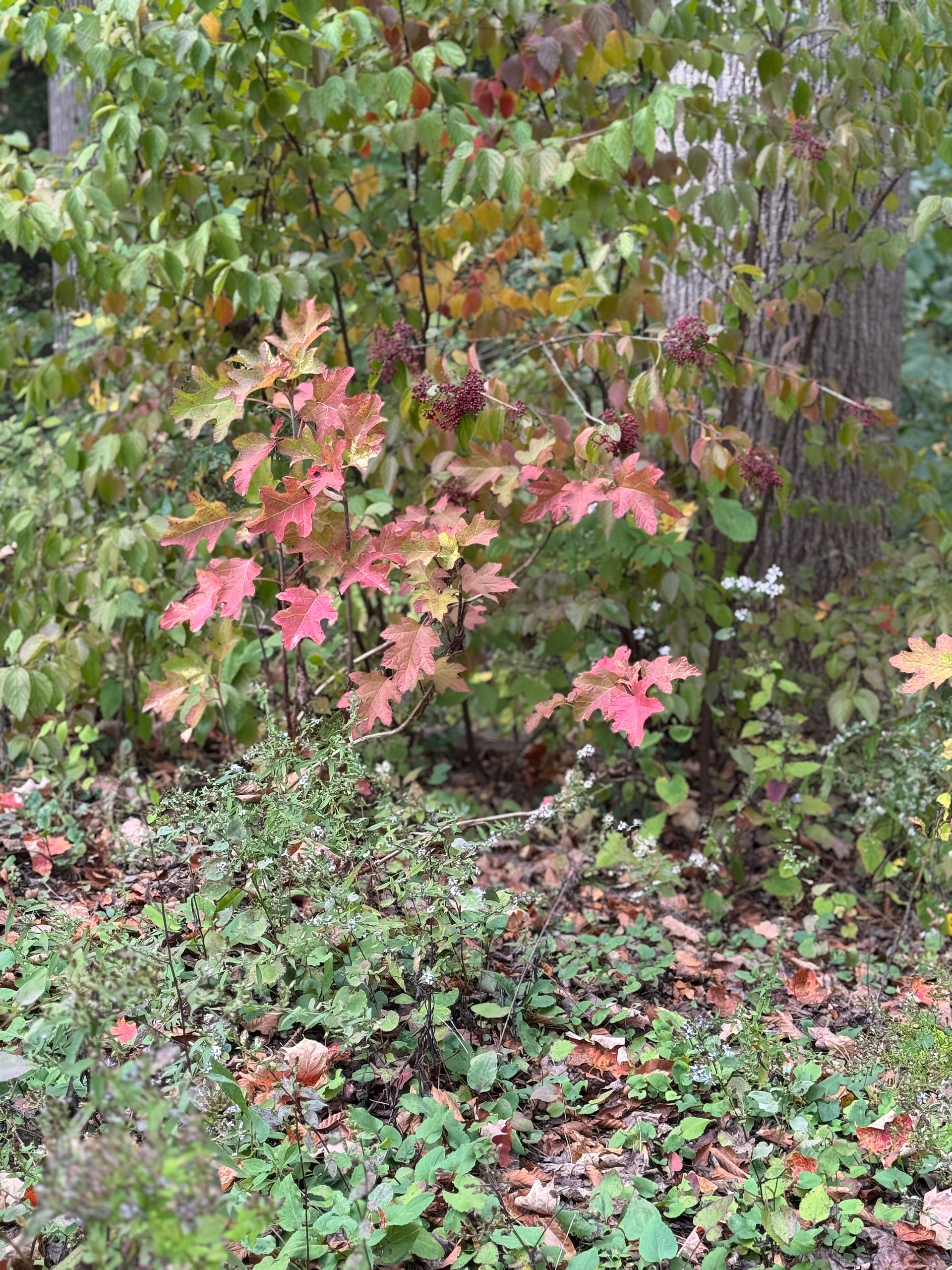
oak leaf hydrangea
The fall colors are also spread out like punctuation points. Highlights of red, added by dogwood trees, fothergilla and oak leaf hydrangea (Hydrangea quercifolia) carry our eye through the garden. Now is a great time to see if your fall colors are interspersed with each other. If something needs moving, October and November are the best time to do that. Soil temperatures are still warm enough for roots to establish and cooler temperatures reduce the stress of transplanting on plants.
Evergreen Backdrops in your Fall Native Garden

A few carefully placed evergreen shrubs, in this case, inkberry shrubs, help give our eye a place to rest among all the deciduous plants. Inkberries are one of the best native evergreens. They are said to grow in part shade or full sun. In my garden, they tend to grow better with more sun. Inkberries can take moisture but also do well in average soils. The straight species grow to 6 feet high and wide. For smaller shrubs, several cultivars bred to be smaller are available. You can read more here.
Repeats in your Fall Native Garden

mountain mint 
asters 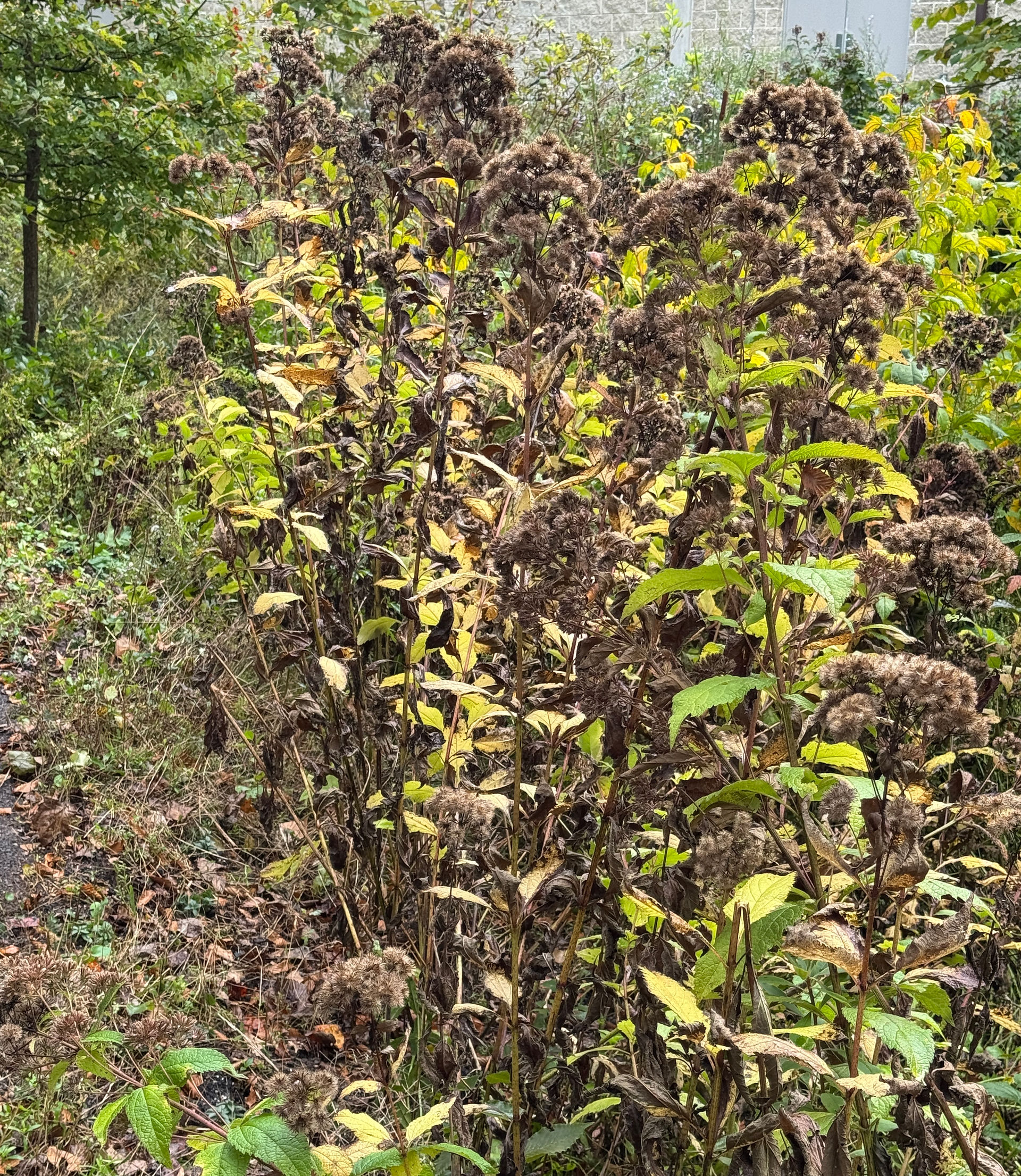
joe pye weed
The garden repeats swaths of several perennials. This adds cohesion and also places for the eye to rest. In this case, two of the repeaters are incredible pollinator magnets: mountain mint (Pycnanthemum) and asters (Symphyotrichum). The third, joe pye weed, has finished flowering and created robust seed heads to feed birds through winter.

aster 
Maryland senna
These design elements, crisp borders to balance naturalistic plantings, creating punctuation points, places for the eye to rest and repetition of plants seem to be hallmarks of professionally designed gardens. These elements can be challenging to achieve at home. Narrowing your plant choices to those that have proved themselves to you as plants that thrive in your garden can be one way to do that. Another note to self!
To visit this native garden garden at Hillwood, take the stairs or elevator that serve the parking decks to the lowest level. This particular garden is not featured on the Hillwood website but there is loads of other information about Hillwood.
A good design, a haven for pollinators and wildlife and a showcase for the beauty of the season make for a stunning time out in gardens, no matter what you choose to call the season!
Happy Gardening.



How wonderful — your native garden in fall looks so vibrant and full of life
I like how dense this planting feels without looking crowded—such balance isn’t easy to achieve!