


Talented Native Plant Gardener & Heuchera!
Writing, photography, social media, seed starting ... she does it all!

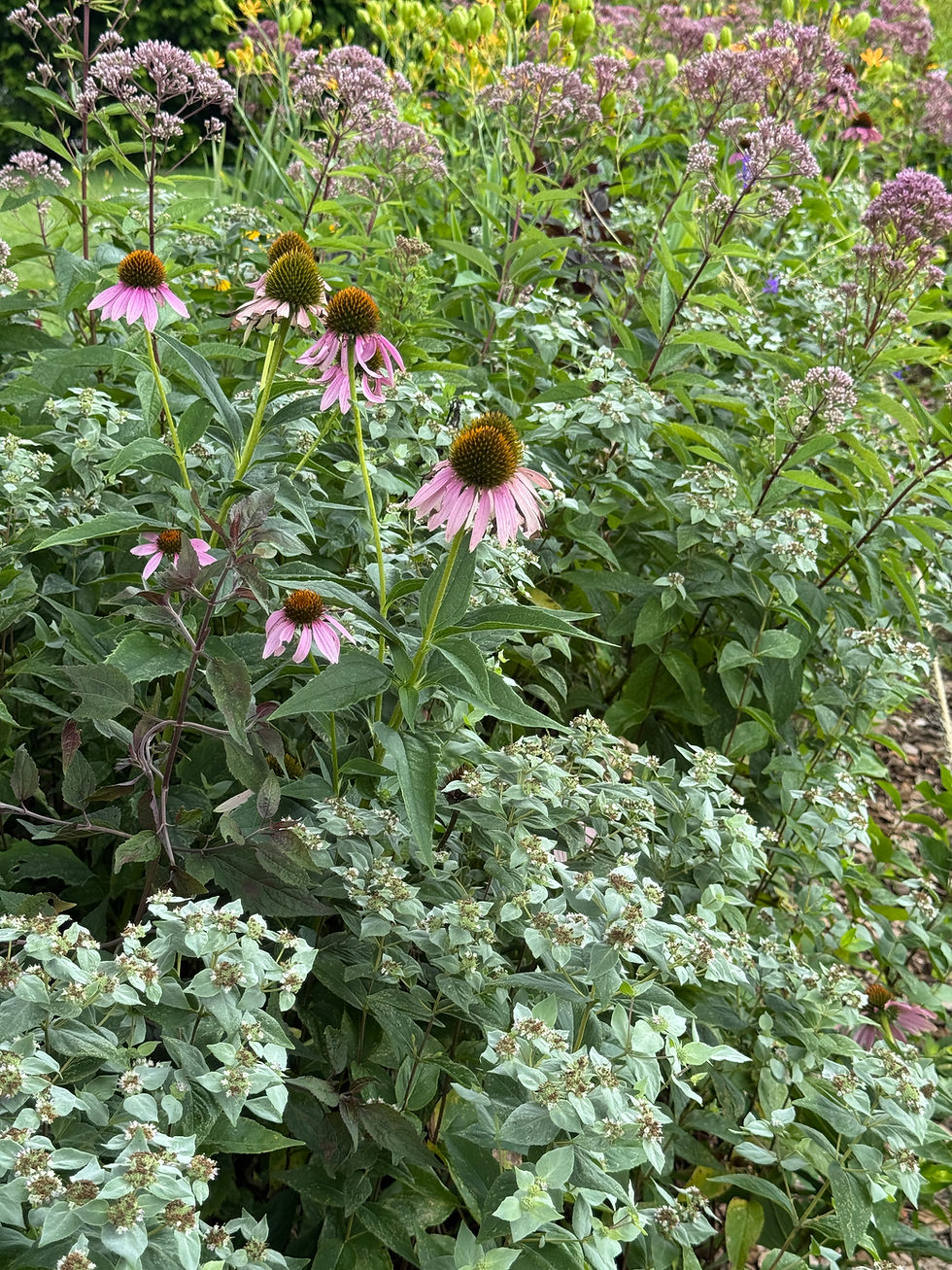
There are all sorts of native plant gardeners from those of us who just planted our first native perennials to those who have rooted out every non-native plant in their garden and so many gardeners in between. Kristin Bailey Wilson (no relation) has a really interesting story. During the years of the Pandemic, Kristin, like so many, read one of Doug Tallamy's books and was immediately hooked. Now unlike many of us who read a Doug Tallamy book and became hooked, Kristin just kept delving and starting plants from seed and delving. One of the more fortunate things for the rest of us about Kristin is she was already an accomplished photographer. Combine her detailed delving with superb photography and you end up with some pretty inspiring work!
That's all in addition to her career in higher education. She has held posts as professor, academic dean and researcher. That all makes a lot of sense when you read her writings and learn all of the fruitful results of the delving.

You can view Kristin's photos on her website Goldenrod Natives. Just stunning. And her blog posts are warm, welcoming, wise and packed with helpful information. I am somewhat enchanted with "Green and White Dining."

Initially, I learned of Kristin on Instagram where she created posts for the Middle Tennessee Chapter of Wild Ones. The exquisite photographs and accompanying detailed information about plants and insects were hard to miss. Such a rare combination of beauty and science.
I was delighted then to actually meet Kristin at the annual Garden Fling, a get together of garden writers and content creators, two years ago. Since then, Kristin and her husband decamped from their longtime home along the Kentucky Tennessee border for Springfield, Missouri where, ensconced in a temporary rental, and with her landlord's permission, Kristin is busy planting native plants at the rear of the lot. She never misses an opportunity!
coreopsis


"I was working on a project for a public park in Kentucky, so I had left over seedlings. I planted them all: lance-leaf coreopsis (Coreopsis lanceolata), black-eyed susans (Rudbeckia hirta), purple coneflower (Echinacea Purpurea), rattlesnake master (Eryngium yuccifolium), wild bergamot (Monarda fistulosa), foxglove beardtongue (Penstemon digitalis), and blue lobelia (Lobelia siphilitica). The blue lobelia has been the most difficult to get established, because the small backyard is sitting in the full sun and it's dry. It looks the best in the one medium-wet corner that gets some shade from the house. Location matters! All the others are happy with their dry and sunny new life along the privacy fence."
Back to the variety of native plant gardeners. You would think Kristin would be one of the 'all in' type native plant gardeners. With her knowledge and seed starting skills, it would be easy for her. She would like us all to be all in for sure but she is also a realist and so we quickly found a bond over how best to share our love of native plants with gardeners who just love non-native plants! One way to do that is to be creative in using native plants in the same ways non-native plants are used. We share the motto whatever you can do with non-natives you can likely do with natives!
Leyonmark Urban Farm Leyonmark Urban Farm Leyonmark Urban Farm Leyonmark Urban Farm Leyonmark Urban Farm Leyonmark Urban Farm
This past summer during the 2026 Garden Fling we were touring the home and urban farm of Wendy and Jeff Leyonmark just outside Buffalo, NY. These suburban farmers grow an amazing diversity of crops and plants. This garden was as close to an aesthetically perfect garden as one can imagine. So many of the gardeners walking through the highly organized space remarked how they felt like they were as close to famed British gardener and T.V. host Monty Don's garden as they would ever get.

winterberry 
redtwig dogwood
Neat rows of thriving produce artfully arranged were intentionally placed. They were even growing rows of native winterberry (Ilex verticillata) and red twig dogwoods (Cornus sericea) for cutting and winter decor. The plantings were so tidy, yet so robust.

This display of different types of geraniums (Pelargonium) in simple clay pots caught everyone's eye. Kristin, not missing a beat, said "oh you could do that with heuchera." Indeed! So, here is my redux of the Leyonmark's display using heuchera varieties. Not having the greenhouse (yet!) to display the pots in front of, I've settled for the edge of a patio.

I chose one selection and four cultivars. A selection is a naturally occurring plant grown because of a particular attribute and retains the characteristics of the straight species. This selection of heuchera, Heuchera villosa 'Autumn Bride,' is an August and September bloomer that thrives in dry shade and part sun locations in my garden. The other two green heuchera are the cultivars 'Citronelle' and 'Green Spice.' The darker colored heuchera are 'Bronze Wave' and 'Obsidian'. The plants with foliage changed to colors unlike that of the straight species, heuchera Americana, are very unlikely to provide the same ecological benefits for insects as the straight species. The latest science tells us insects that typically consume these plants are unlikely to be able to identify the plants with changed foliage color because either they aren't able to see or aren't looking for those colors.
Two things to note about all of these heuchera cultivars is there are a lot of them out there and quite a number can be very short lived, meaning they will sort of fade away after a few years. The best way to make sure you get a plant that will last is to do a quick check of the on-line Mt. Cuba assessment of heuchera cultivars.
Why would someone like Kristin, a master naturalist and a master gardener, who can literally talk about all the intricate details of the lives of insects and the native plants they subsist on, spend her valuable brain power thinking of ways to display cultivars of native plants? It's the same reason I'm learning to differentiate the music of Olivia Dean from the music of Olivia Rodriguez. My niece talks enthusiastically about the recent philanthropic efforts of Olivia Rodriguez. I want to understand her stories about these talented musicians and hopefully she will listen to my plant stories . Meeting people where they are - the key to spreading the joy of native plants!

Heuchera, whether straight species or cultivars, are an easy introduction to native plants for those with shade. They grow well in shade and part shade in a variety of soils. There are so many choices and colors. Definitely a plant to highlight for those new to native plants.
As Kristin looks forward, she says "we're moving to a house in the middle of a pasture, so it's a blank slate, and I couldn't be more thrilled! I'm planning some prairie-inspired plantings that will be able to take the dry heat of an August in southwest Missouri. I'm thinking about and studying books on block plantings in a Piet Oudolf style. These will replace the lawn. Next to the house, I'll try my hand at formal landscaping with native plants, including spider milkweed (Asclepias viridis) and white wild indigo (Baptisia alba)."
Happy Gardening.




Comments