


Sunflowers: Perfect for Transitions & More
Updated: Sep 3
Goldfinches galore.

I'm not sure there is a more recognized plant than the annual sunflower. (Helianthus annuus). Native to the western United States, annual sunflowers are grown throughout the world in all sorts of gardens, as crops and to create on trend selfie destinations. Wherever they grow, good cheer is sure to follow.
Last year, in my 1/8 acre urban garden, a 100 plus year old SIberian elm tree (Ulmus pumila) had become brittle and dangerous. It was slated for removal. On a May morning, a shaded woodland garden was instantaneously bathed in light. It seemed the entire garden was suddenly lit up like a theatre stage.

100+ year old Siberian elm tree tree and stump removal after tree removal
The area immediately taken up by the tree was a 12 x 12 foot piece of ground along the western edge of the side garden. The arborists brought in a skid-steer with a grinder and did their best to cut up and grind the massive base and roots of the tree. When they left, the arborists reminded me not to plant anything in that area for a year or two. A year or two is the bare minimum amount of time needed for wood chips and roots to decompose and create soil suitable for supporting plants.
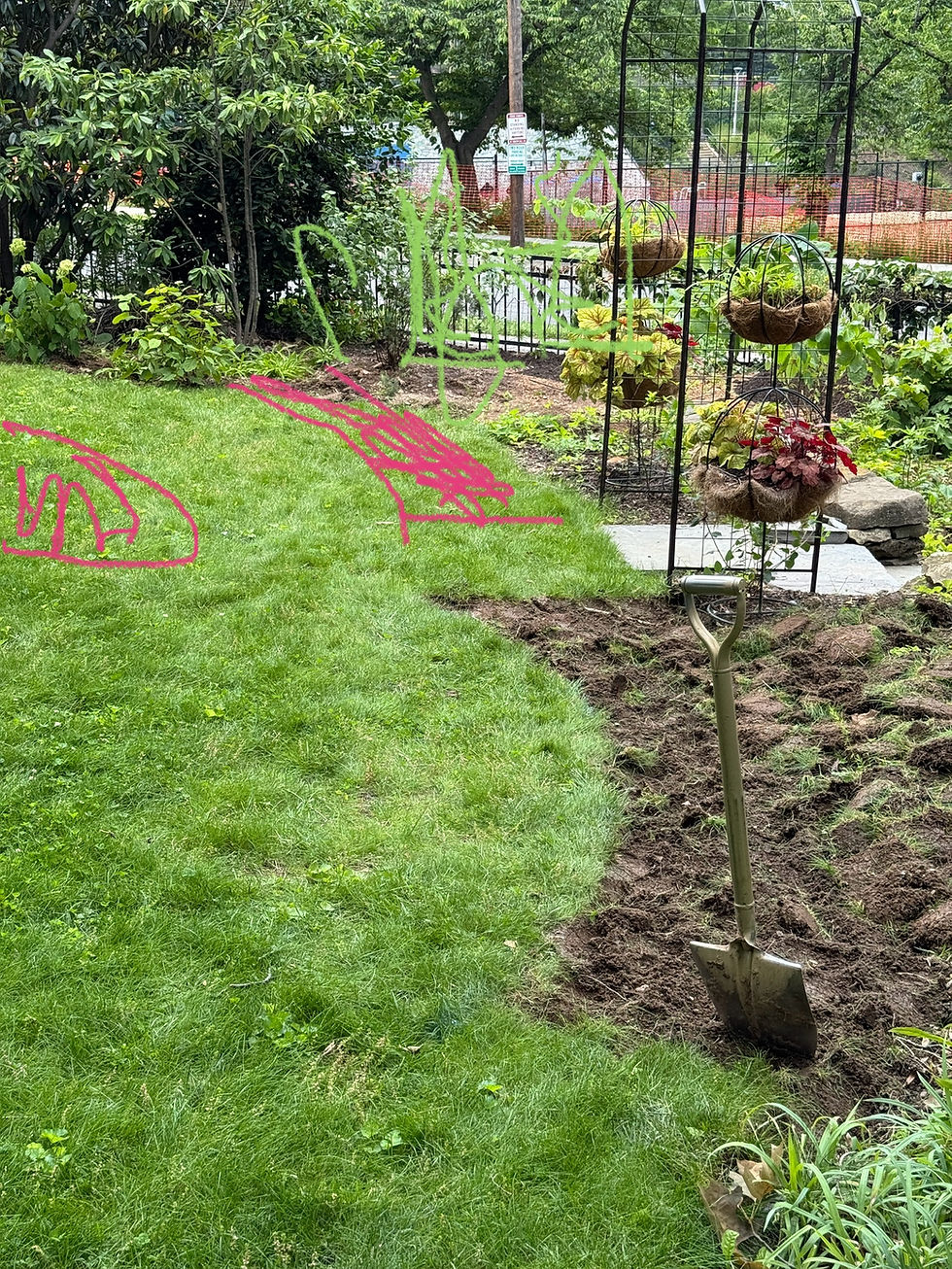
In a small garden, that amount of space is a lot of real estate. My first task was to quickly move all of the shade plants out of the sun. Every nook and cranny of shade left received transplants of shade loving sedges, perennials and shrubs. After that was done, the place where the tree was looked much like the missing tooth of a pumpkin's gap filled smile. I had plans for my new sun garden and they involved converting lots of turf to planting beds and installing a gravel path, all of which would take time. I needed an inexpensive and temporary solution to fill the gaping hole.
Inexpensive because I wasn't sure anything at all would grow in the fresh wood chips. Temporary because I wanted time to plan out what I would do and did not want to invest a lot of effort in something that would likely not be permanent. This is where sunflowers came in.
I have to admit I have been trying to grow sunflowers in my garden for a number of years. Between rabbits and compacted soil, planting seeds in various places in the garden in May or June had resulted in little success. Either I would forget to water the out of the way seedlings or the seedlings would disappear over night.
sunflower 2 to 4' high in raised bed sunflower root ball ready to transplant
Last summer, I decided to start the sunflowers in a raised bed, out of the reach of rabbits, and then try transplanting them to the newly bare spot. Standard advice for growing sunflowers is not to start them in seed trays but rather to plant them directly in the ground in their permanent location after the temps warm up. Having had little success with that in the past, I planted my seeds in the raised beds, and in that compost amended soil, the seedlings readiliy emerged, I waited until they reached two to four feet before transplanting. Once they had some height, and before they started forming flower buds, I transplanted the plants to the side garden.
I dug the hole for the new location of the sunflowers first. Digging a hole in the chipped wood about twice as big as I would need. I added some soil from nearby and watered the hole. Once the new location was ready, I scooped up as large a root ball as I could from the raised bed, and moved the sunflower into its new location, always in the evening so the plant could begin its first few hours in the cool of the night. I added a temporary stake to help keep the sunflower upright. The next few mornings I'd water again. Sometimes the leaves would wilt the first few days but they eventually perked back up. After a couple of days, it was smooth sailing. I have had an almost 100% success rate with transplanting sunflowers. The sunflowers form deep tap roots and do not need supplemental watering once established.
Sunflowers: Unexpected Surprises

This year, the second summer for the sunflowers,, a number of sunflowers self seeded. Self seeded plants are always the strongest and the sunflowers were no exception. The stalks of the self-seeded sunflowers are 1 to 2" thick, need no staking, started blooming in early summer, stand up to the strongest of thunderstorms and are still blooming.

Goldfinches had visited two niger seed tube feeders I hung for years. When I removed the feeders a few years back, fearful I would inadvertantly spread disease among birds, I expected a dip in the number of goldfinches, but to my delight, goldfinches returned to a patch of coneflowers. And now they are visiting the sunflowers in even larger numbers. It's a parade of bright yellow birds all day long.
The height of the multi-branching sunflowers, between 6 and 10 feet, has added a cozier feel to that part of the garden. The Siberian elm tree was massive and I now realize cast somewhat of a heavy feel overhead. The height of the sunflowers is just right to add privacy and a sense of enclosure but is not at all overwhelming. It makes a pretty good screen in summer.
Sunflowers: Growing Tips

Sunflowers require full sun - so over 6 hours of sun a day and prefer moist soils though average moisture soils are fine. They are drought tolerant once established. They grow in a range of soil types including clay and sand.
Look for multi-branching sunflowers. The largest sunflowers tend to be single stalk plants that produce only one flower. Multi-branching sunflowers produce many, many flowers from mid-summer into fall. The flowers are a bit smaller but the quantity and duration of bloom more than make up for that.
Some sunflowers, typically single stemmed flowers, are bred for cut flower arrangments and produce no pollen. Avoid these types of sunflowers if your aim is to feed birds and pollinators.
To extend the flowering, deadhead sunflowers regularly. I let the cut flowers drop to the ground so birds can still get the seeds. This will also increase the chances of self seeding for the following year.
To extend flowering even further, sow a couple of sunflower seeds every few weeks through August. I just transplanted a seedling sunflower today and by next week, it will likely be flowering.
Cheer

budding 
budding 
sunflower 
sunflower 
sunflower seeds developing 
sunflower 
fibonacci sequence in sunflower 
sunflower 
faded sunflower
These low cost, easy to grow flowers are perfect temporary or permanent solutions and make any garden transition all the easier. Two summers in with the sunflowers, I just can't imagine the garden without them now. They bring so much energy and happiness and I have even spotted a selfie taker or two!
Happy Gardening.


Goldfinches also love coreopsis. I have a few Lanceleaf coreopsis in front of my house and I've seen a pair spend quite a bit of time enjoying the seeds of the dried blooms. Even though the stems are small, they are sturdy enough to support the birds flitting about. My brown-eyed Susans have just volunteered nearby so I have long season of yellow blooms. Both plants can take a little deer munching and I've found the deer keep the size of the Brown-eyed Susans more manageable (3' tall vs. 6' tall). Feel free to give them chop in July as they're keep blooming.
Edible privacy screening! Annuals are such a great way to utilize those in-between, temporary blank spaces.
This is so wonderful! This is a great post and I love the pictures and guide to the sunflowers. I've tried to grow this type of sunflower several times with no success. I will definitely try your approach. Thank you so much for this very helpful post. At some point, I'd love to know more about how you keep your Virginia creeper vine in check. I have to replace ivy on my hill and I've thought about this but am fearful that it will get beyond me to manage.