


Growing Native Plants for Winter Decor
Making the most of winter in the garden.
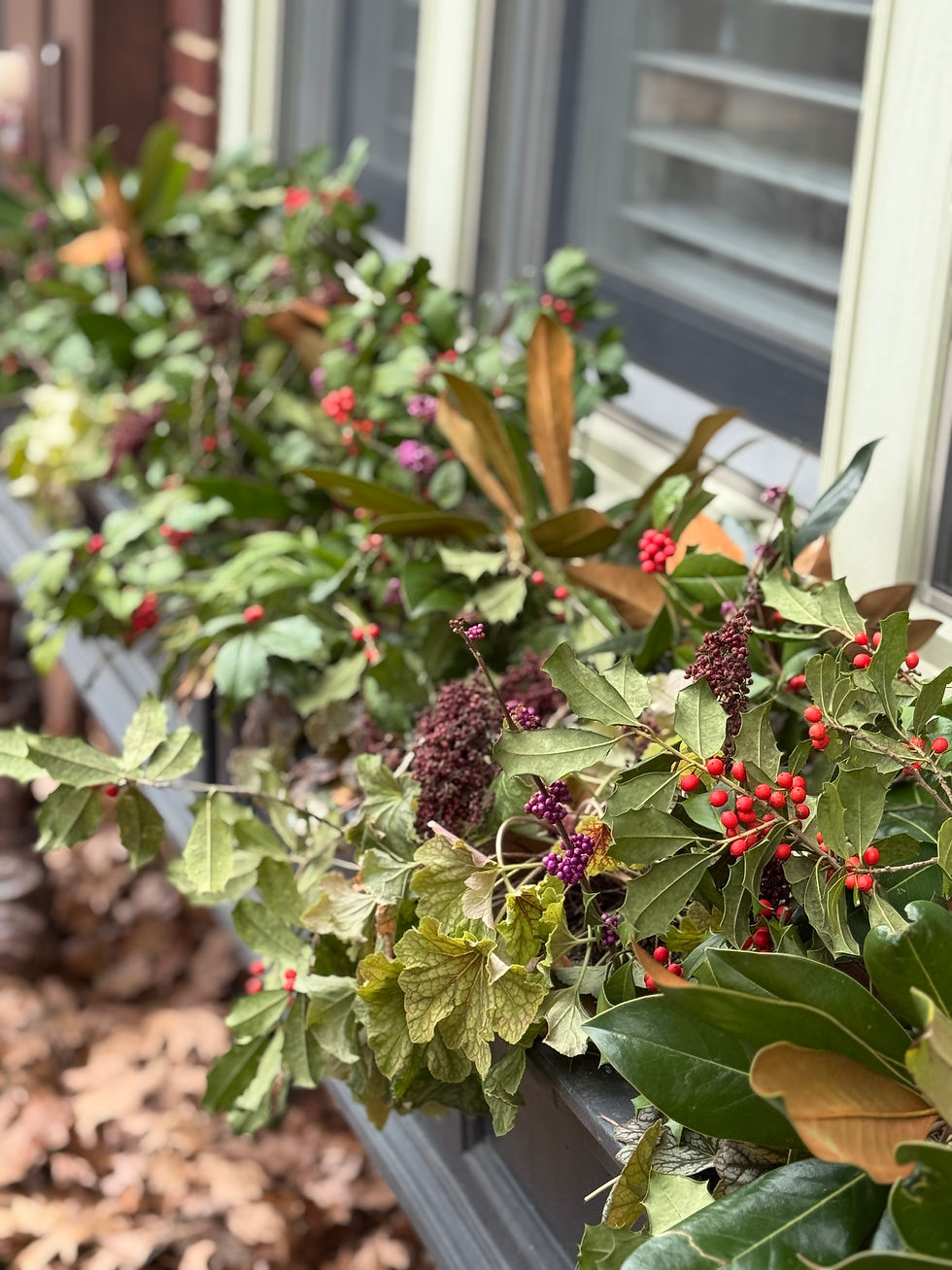
If you are out and about in December, or just at your grocery store for that matter, you have likely seen bunches of winterberry, red twig dogwood stems and more for sale in addition to the greenery sold at farm stands, markets, garden centers and more. A lot of what is being sold is native to our Chesapeake region and we can grow it right in our own gardens! Budget friendly too!

Now is an excellent time to look around your garden to see where you can place some of these native plants to give you plenty of plants to work with -- whether you want to create a container, build a wreath, enhance a window box or simply bring nature inside. Added bonus - these are wildlife friendly plants.
Native Shrubs for Winter Decor
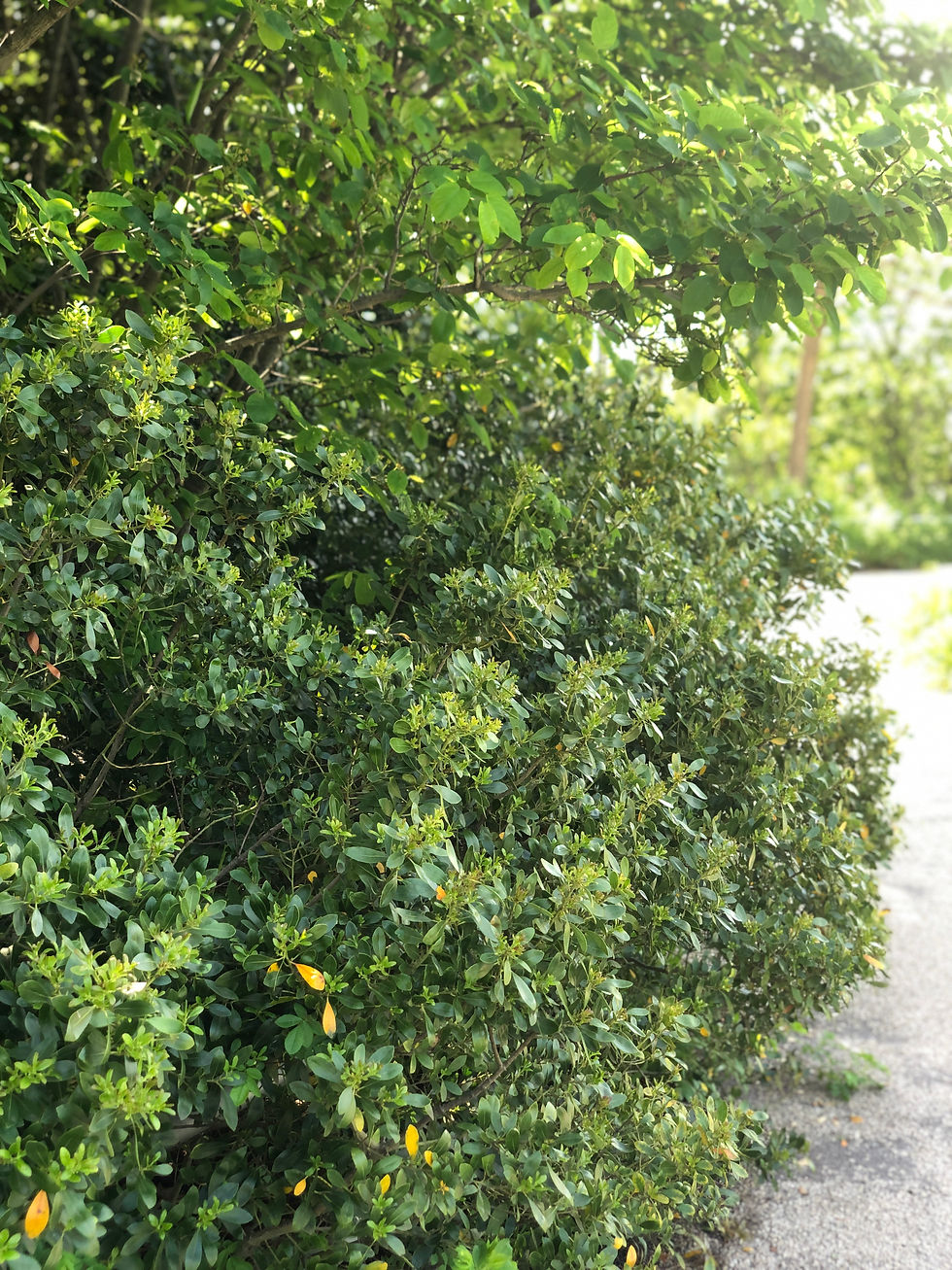
Bayberry
Bayberry shrubs (Morella pensylvanica) can grow to 15 feet tall but 10 feet is more the norm in a garden setting. They thrive in part shade and moist acidic soils but tolerate neutral soils as well. The farther south they are, the more likely they are to retain their leaves all winter. The shrubs are loosely shaped and their size and mass make a great screen or backdrop. Plus those white berries on female plants are very interesting! To get the berries, you will need a male and female plant. Also check out northern bayberry (Myrica Pennsylvanica) for sunny areas and partial shade.
Details:
General: large shrub
Light: part shade
Soil: prefers acidic but tolerates neutral soils
Moisture:moist to average soils
Uses: screen, hedgerow, feature shrub
Cuttings: Can be pruned at any time to shape (please note: pruning in fall can generate new growth which may not have time to harden off before the first frost)

Beautyberry
Beautyberry (Callicarpa Americana) is very easy to grow in full sun and part shade. It naturally grows in moist soil but you can grow it in average soils as well. Beautyberry grows in clay soils too. A mature shrub reaches up to 6 feet high and wide.
Details:
General: shrub growing 8' to 10' tall and wide
Light: full sun to part shade
Soil: average and clay soils
Moisture: prefers moist but grows in average moisture
Uses: screen, hedgerow, feature shrub, urban tolerant
Cuttings: Since this shrub blooms on new wood, it can be reduced by up to 2/3 to each winter to encourage a vase like shape. Taking cuttings in early winter is just a bit of early pruning.

Eastern Red Cedar 'Grey Owl'
Eastern red cedar ‘Grey Owl’ (Juniperus virginiana ‘Grey Owl‘) is a small version of eastern red cedar and very easy to find in native plant nurseries and garden centers. It grows a couple of feet high and 4 to 6 feet wide in full sun.
Details:
General: shrub growing 4' to 6' high and wide
Light: full sun
Soil: average
Moisture: average to dry
Uses: screen, hedgerow, feature shrub, urban tolerant
Cuttings: Can be pruned at any time to shape

Inkberry
Inkberry (Ilex glabra) grows in sun or partial shade. Inkberry is an excellent native substitute for ornamental boxwood and much easier to care for.
Details:
General: evergreen shrub tall growing 5' to 8' high and wide
Light: full sun to part shade
Soil: average soils
Moisture: prefers moist but grows in average soils
Uses: screen, hedgerow, feature shrub, urban tolerant
Cultivars: several smaller cultivars readily available
Cuttings: Can be pruned at any time to shape (please note; pruning in fall can generate new growth which may not have time to harden off before the first frost)

Red Twig Dogwood
Native dogwood shrubs (Cornus sericea) grow 4 to 6 feet high and wide and grow well in sun and part shade. They easily withstand clay and wet soils and grow well in average moisture soils too.
Details:
General: shrub growing 4' to 6' tall and wide
Light: full sun to part shade
Soil: average including clay
Moisture: moist to average
Uses: hedgerow, feature shrub, urban tolerant
Cuttings: Since the younger stems produce the brightest color, it is recommend to either 1) cut back the entire plant to 12" in height every three years or 2) cut out one third of the stems each year, focusing on removing the duller colored stems which will be the older stems. Cutting branches in December is just an early start on that process.
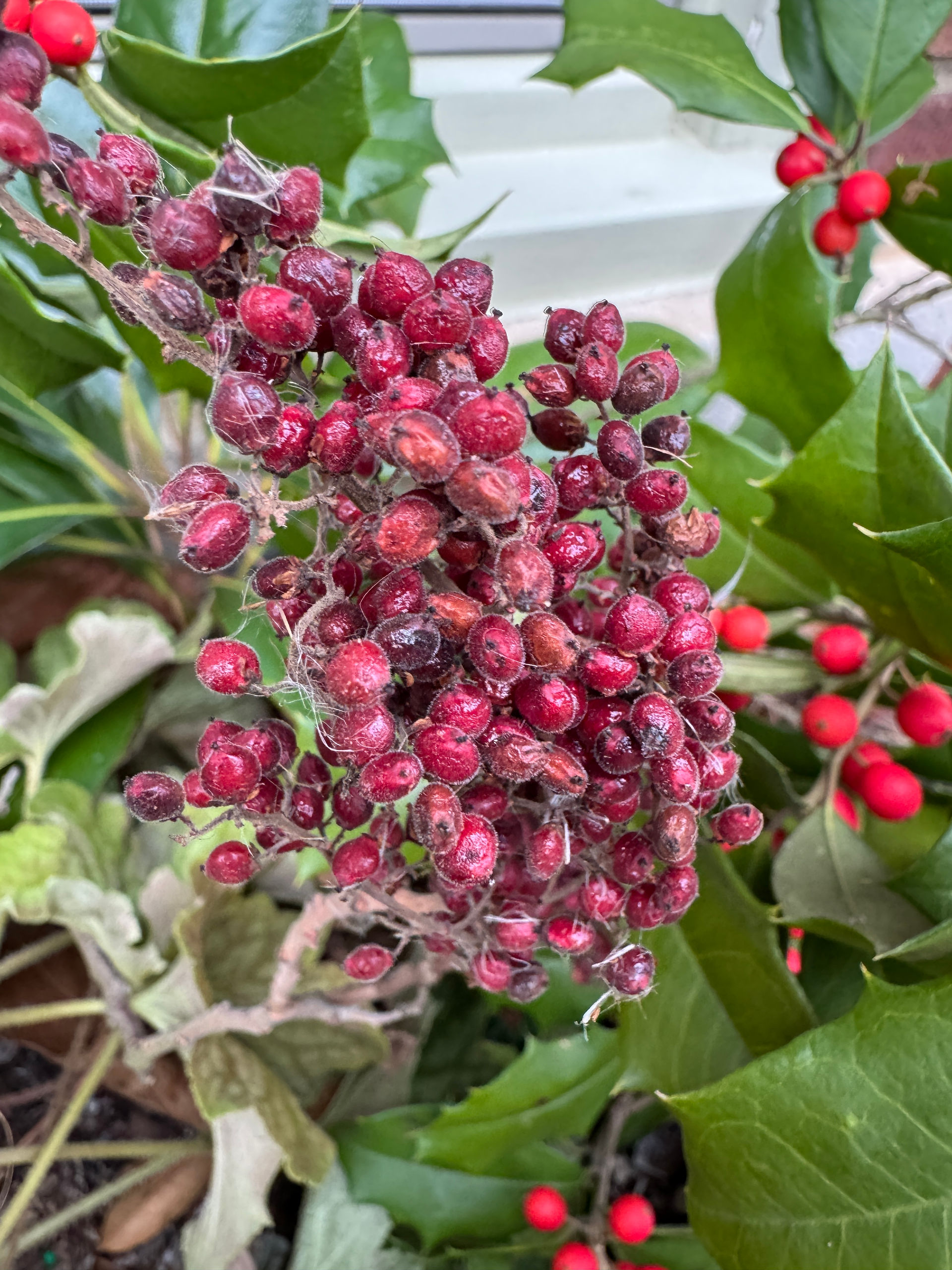
sumac fruits 
sumac along NYC High Line
Winged Sumac
Winged sumac(Rhus copallinum) is a very easy to grow shrub or small tree that spreads readily. There are male and female plants and the female plants develop the clusters of velvety red fruits.
Details:
General: shrub or small tree
Light: full sun
Soil: thrives in free draining soils
Moisture: moist to average to dry
Uses: hedgerow, feature shrub/tree, urban tolerant
Cuttings: Can be pruned at any time to shape

Yellow Twig Dogwood'
Yellow twig dogwoods (Cornus sericiea 'Flaviramea') grow 4 to 6 feet high and wide and grow well in sun and part shade. They easily withstand clay and wet soils and grow well in average moisture soils too.
Details:
General: shrub growing 4' to 6' tall and wide
Light: full sun to part shade
Soil: average including clay
Moisture: moist to average soils
Uses: hedgerow, feature shrub, urban tolerant
Cuttings: Since the younger stems produce the brightest color, it is recommend to either 1) cut back the entire plant to 12" in height every three years or 2) cut out one third of the stems each year, focusing on removing the duller colored stems which will be the older stems. Cutting branches in December is just an early start on that process.

Winterberry
Winterberry shrubs (Ilex verticillata) grow 6 to 8 feet in sun or part shade. The more sun they get, the more berries you and the birds get. Shrubs are either male or female. Females bear the berries and you must have one male shrub within 50 feet of the female shrubs to ensure berries.
Details:
General: shrub growing 6' to 8' tall
Light: full sun to part shade
Soil: average including clay
Moisture: prefers moist and grows in average soils
Uses: hedgerow, feature shrub, urban tolerant
Cuttings: Can be pruned at any time to shape (please note; pruning in fall can generate new growth which may not have time to harden off before the first frost)
Native Trees for Winter Decor

American Holly
American hollies (Ilex opaca) are extremely resilient plants and found throughout the mid-Atlantic. Male and female trees bloom in spring to early summer with very small white flowers. American hollies grow best in sun to part shade with good drainage. There are male and female plants and the female plants develop berries.
Details:
General: tall tree growing 40' to 50' tall
Light: full sun to part shade
Soil: prefers acidic and well drained but grows in a range of soils
Moisture: dry to wet
Uses: specimen tree, screen, urban tolerant
Cuttings: Can be pruned at any time to shape

Atlantic White Cedar
Atlantic white cedar (Chamaecyparis thyoides) trees are tall columnar shaped trees with very textured foliage. The trees grow to 80' in the wild but are typically smaller in gardens. Once mature, the trees lose branches at the base of the trunk so it is only possible to prune branches from trees on the younger side.
Details:
General: tall tree averaging 40' and to 80' tall in ideal conditions
Light: full sun
Soil: prefers sandy, peaty acidic and well drained
Moisture: prefers wet but can grow in average to moist soils, not drought tolerant
Use: specimen tree
Cultivars: smaller cultivars are available
Cuttings: Can be pruned at any time to shape
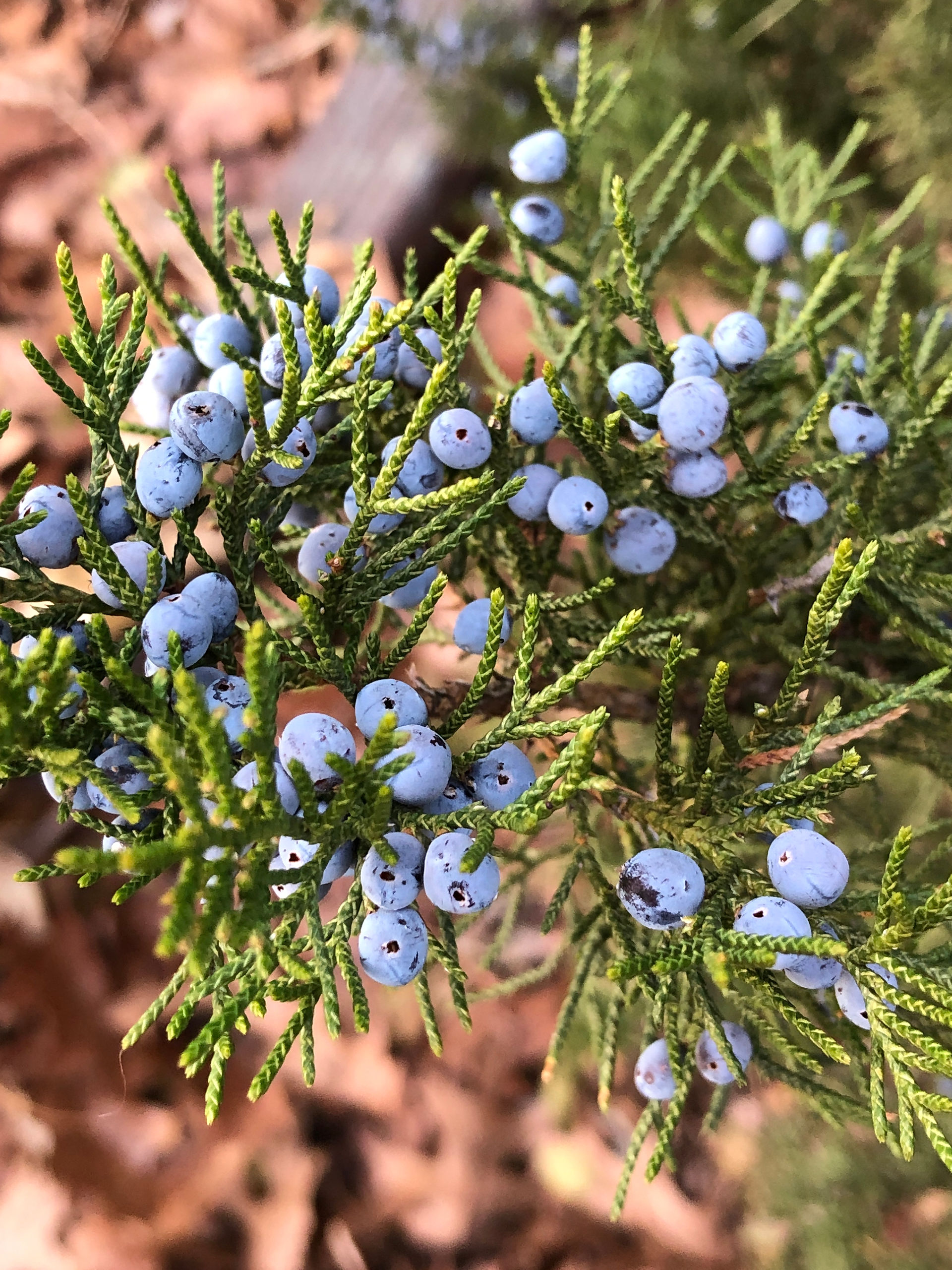
eastern red cedar berries 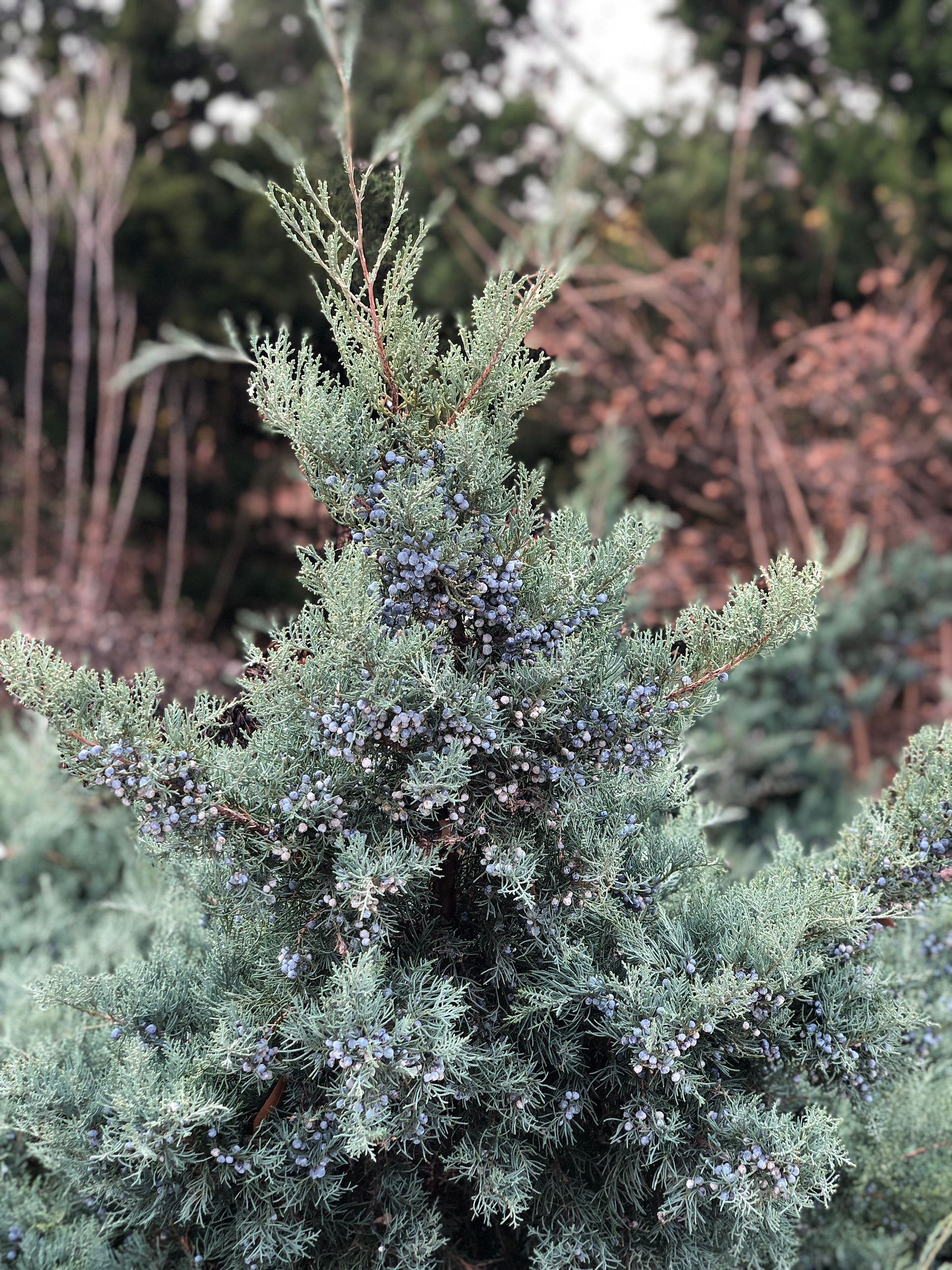
eastern red cedar
Eastern Red Cedar
Eastern red cedar (Juniperis virginiana) is a native evergreen growing to heights of 30 to 60 feet.
Eastern red cedar grows easily in clay, dry and wet soils (though it can't grow in consistently wet soils). The Missouri Botanical Garden says it has the best drought resistance of any conifer native to the eastern U.S. These trees thrive in full sun and grow in part sun too. There are male and female trees. Female trees produce blue berries.
Details:
General: tall tree averaging 30' to 60' tall
Light: full sun to part shade
Soil: prefers loamy and well drained but grows in a range of soils
Moisture: dry to moist
Uses: specimen tree, screen, wildlife, urban tolerant
Cultivars: several for smaller height, narrower form and bluer color
Cuttings: Can be pruned at any time to shape

Hemlock
Hemlock (Tsuga canadensis) is an evergreen tree that grows in shady moist environments, typically mountainous areas and some parts of the piedmont. Hemlocks are not wind or drought tolerant and experts do not recommend these trees for urban areas though you will sometimes see hemlocks growing in those conditions.
Details:
General: tall tree averaging 40' to 70' tall
Light: dappled shade to full shade
Soil: prefers good drainage
Moisture: moist soils
Use: specimen tree, screen, wildlife
Cultivars: several for smaller height
Cuttings: Can be pruned at any time to shape

Northern Cedar
Northern white cedar (Thuja occidentalis) is common on the east coast from New York north. It also grows sporadically south to North Carolina. This is a graceful, tall evergreen tree that is also available in compact sizes. Morton Arboretum lists a number of cultivars. These trees are generally good for full sun locations and need virtually no care once established.
Details:
General: tall tree averaging 40' to 60' tall
Light: full sun to part shade
Soil: grows in a range of soils including clay
Moisture: average to moist
Use: specimen tree, screen, urban tolerant
Cultivars: many cultivars alter size and shape including small globes and shorter spires
Cuttings: Can be pruned at any time to shape

Southern Magnolia
Southern magnolias (Magnolia grandiflora) are large leaved evergreens native to the southeastern United States. The thick glossy leaves are frequently used in outdoor decor.
Details:
General: tall tree growing averaging 50' tall
Light: full sun to part shade
Soil: prefers acidic soils but grows in a range of soils including clay
Moisture: average to moist soils
Uses: specimen tree, screen, urban tolerant
Cultivars: cultivars for smaller size
Cuttings: Can be pruned at any time to shape
Winter Decor
Whether you create an outdoor wildlife friendly decor statement or bring a bunch of greens indoors, now is the time to check out all of the inspiration around and think about what to plant in time to brighten spirits for winter solstice 2026!
Happy Gardening.


Comments