


Fall Bouquets & Fallen Leaves
Updated: 17 minutes ago

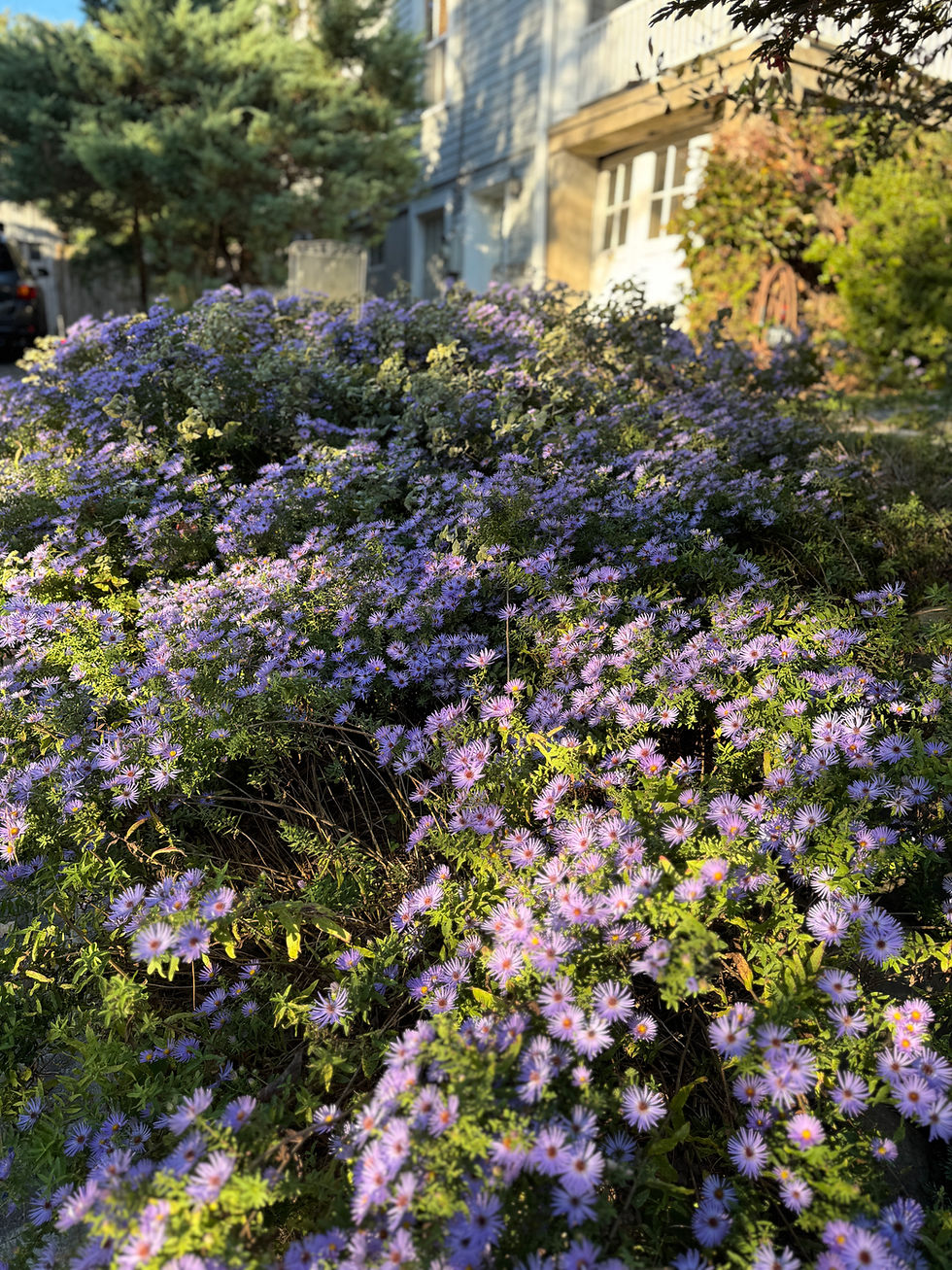
The lack of rain in the mid-Atlantic this year has made for an extended season in our gardens and brilliant fall colors. Perfect for cutting a few more flowers. Sporadic late blooms in my garden this year include trumpet honeysuckle, golden alexanders and perennial sunflowers.
cut flowers from the garden 
starting with Carolina allspice as the base 
adding oak leaf hydrangea 
adding perennial sunflowers 
adding Virginia Creeper 
adding coral honeysuckle 
adding passionflower fruits 
adding golden alexanders fall native flowers!
Have You Put Your Garden to Bed?

That often repeated fall cleanup advice seems so outdated now or is it?! Horticulturalist Rebecca McMackin and native plant TED talk diva recently queried her many followers as to how to rebrand the notion of leaves as litter destined to be bagged, vacuumed and carted away. She, of course, is encouraging us all to leave the leaves as they create an incredible mulch and eventually break to create a rich soil amendment, much as they do on the forest floor. Best of all, they enable thousands of over wintering insects to survive feeding birds and our ecosystem. The winning catch phrase? Leaf blanket. Create a winter leaf blanket for your garden. Leaves insulate and nourish your garden much as a cozy blanket can nourish our souls on a winter's night.
There has been much ado about leaves in the garden media world as of late, in large part because of new research on the value of leaves from Dr. Max Ferlauto, then with the University of Maryland and now with the Maryland Department of Natural Resources. Thankfully there is a lot of very pragmatic information about how to go about this. If you have a smallish garden and big trees as I do, you'll need some sort of strategy! A ten inch layer, a five inch layer, what do you do with the extras?
These talks with study author Max Frelauto are pretty interesting. My favorite is the hour long conversation with Kathy Jentz of the DC Garden Podcast because Kathy's questions are hyper local to the Chesapeake Watershed.
Garden DC Podcast: Leave the Leaves
Joe Gardener: What Science Says About Leaving the Leaves
A Way to Garden: Calculating the Impact of Leaving the Leaves
Max's Research: research abstract
If your holidays are full, here are my takeaways:
Lawns: Clear your lawns of leaves. You can leave only the lightest layer of leaves but never oak leaves, they take too long to break down.). If you are unsure, rake the leaves off the lawn.
Thickness of Leaves in Garden Beds: Five inches is a good max. It also depends on the type of leaves. If you have oak or southern magnolia leaves, those take a very long itme to break down and create a very dense mat. If those are the leaves you have, go with a thinner layer.
Leaves Attracting Ticks: A five inch layer of leaves will not do that. A several foot high pile of leaves may.
Extra leaves: You can put them in lawn bags or another container and let them break down over time (may be a year or so). Many refer to leaf compost as black gold for the garden. It's that good.
Moving Leaves to Other Areas: This is a mixed bag. If you move leaves from beneath a certain type of tree to beneath a different type of tree, the overwintering insects may not be able to reach their host tree. It seems as though moving from like tree to like tree would be ok and in a very small space, moving leaves may generally be ok. At the end of the day though it seems as though moving leaves to a place where you can save them rather than shredding or discarding them might be better than not saving them at all.
Shredding Leaves: Since a major reason for retaining leaves is to allow the many beneficial insects to over winter, shredding is likely to destroy many of those insects. Raking is least disruptive. Blowing a bit more disruptive.
Overwintering Insects: Most are invisible to us, so small we wouldn't even notice them. But they are there. And always good to remember experts say 98% of insects are beneficial in our gardens.

In my garden, every year what I do with all of these oak leaves evolves! This year I will clear the front entrance area and move the oak leaves to the side of the house where, hopefully, prevailing westerly winds will not blow the leaves right back to the front! I will create a thicker area of mulch over a small patch of non-native dahlias to insulate and hopefully successfully overwinter the tubers. I'll hem those leaves in with fallen branches and sunflower stalks.
Since we have had very little rain our area this fall, the soils are already dry. I'll do my best to get a 5" layer of leaves on the rest of the garden to prevent further drying out of soils, particularly along the western edge. It is a challenge though with those winds blowing from the west! As for the rest, I'll put as many as I can in a small tumbling composter, top off a few small raised beds and fill a couple of paper lawn bags. Any remainders will be destined for City collection.
Again, the best option, if you can, is to listen to one of the interviews with Max Ferlauto. Thank you for reading and wishing you a very peaceful holiday weekend.
Happy Gardening.




Dear Shari,
You answered all my questions this week in one post! Thanks for doing what you do. I'll definitely listen to the interview.
Sharon